
Drywall Repair in Woodridge, IL
Patching holes, cracks, and damaged sections cleanly.
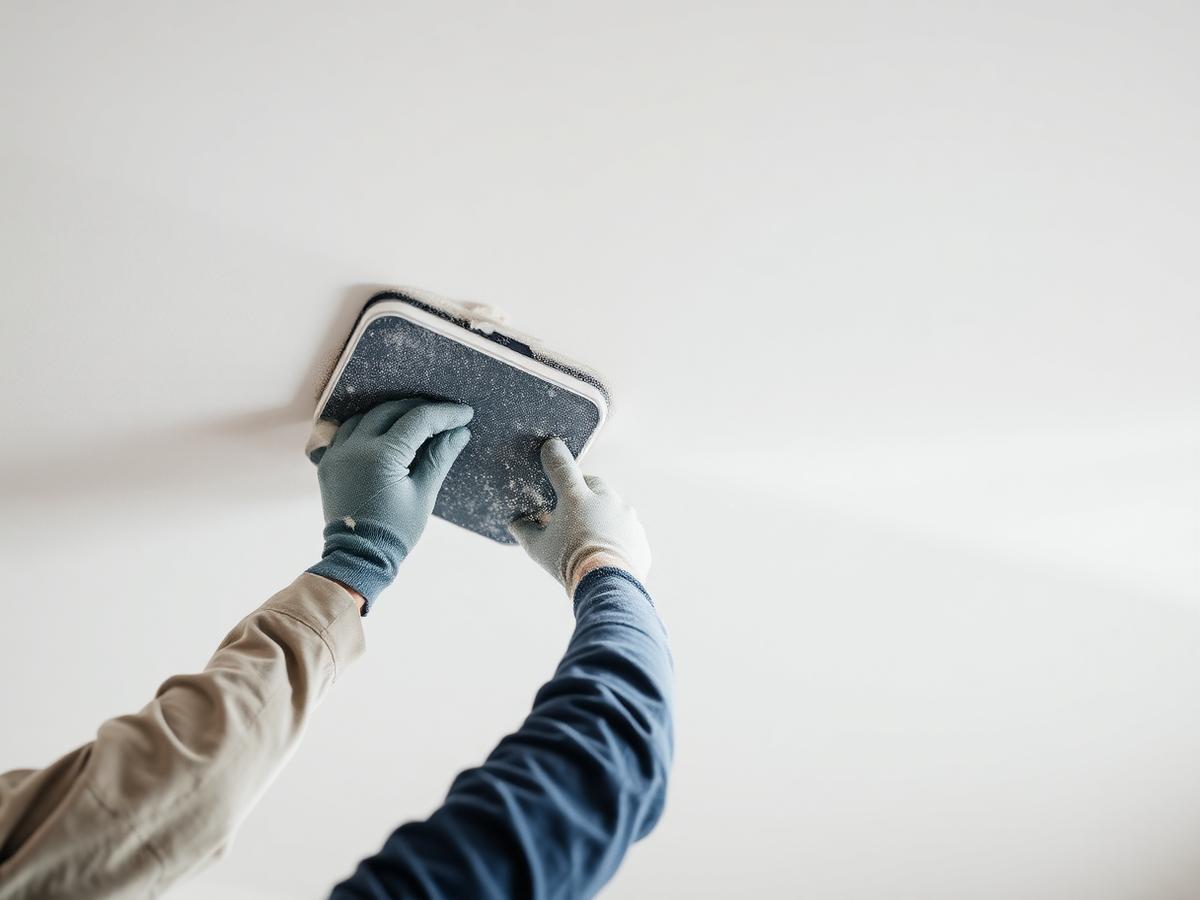
Sagging, stained, and cracked ceiling repair for Woodridge homes and businesses, from Farmingdale Village split levels to Seven Bridges vaulted great rooms.
Free Estimate
Request a drywall repair or installation quote
Share a few details and we'll follow up within one business day.
Ceiling problems in Woodridge usually come from one of three sources: roof or plumbing leaks staining and softening the board, truss movement cracking the ceiling-to-wall joint, or age-related sag in older 1/2-inch board that's carried decades of attic heat cycling in Farmingdale Village and Winston Hills homes. Each needs a different fix, and patching over the wrong cause just means a repeat visit next season.
Vaulted and cathedral ceilings in Seven Bridges and Hobson Greene homes present their own issue - long spans of board that sag slightly under their own weight over a hot attic summer, plus corner cracking where the ceiling meets a wall at a steep pitch. Those ceilings need 5/8-inch board and proper truss-clip fastening when we're replacing a section, not a like-for-like swap with whatever thinner board was used originally.
We also see a fair number of ceiling calls from popcorn-texture removal in older Farmingdale Village homes being updated for resale, where the underlying board is fine but the texture needs to come off and the surface skim-coated smooth before repainting.
A brown ring on a Woodridge ceiling means water got into the board at some point, whether from a roof leak, an upstairs bathroom, or condensation around an attic vent. We always confirm the leak source is fixed - or verify with the homeowner that a roofer or plumber has already addressed it - before we cut into the ceiling, because replacing drywall over an active leak just means doing the job twice.
Once the source is confirmed dry, we cut back to sound board, check for any softness or mold in the surrounding area, and replace the damaged section with matching thickness board, taped and finished to blend with the surrounding texture.
Stains that have only lightly discolored the board without softening it sometimes just need a stain-blocking primer rather than a full cutout - we tell homeowners honestly which situation they're in rather than always recommending the larger repair.
The most common recurring ceiling crack we see in Seven Bridges and Hobson Greene homes runs along the perimeter where ceiling meets wall, opening every winter and closing back up by summer. That's truss uplift - the roof trusses lift slightly during cold, dry months and pull the ceiling drywall away from the top of the wall.
The lasting fix is a floating ceiling corner: the last 16 inches of ceiling board near the wall is left unfastened to the wall framing, taped with a detail that allows the joint to flex seasonally without tearing the paper tape. A rigid repair without that detail will crack again by the following winter, guaranteed.
We flag this specifically for homeowners in newer Woodridge construction, since it's easy to assume a recurring crack means a bad drywall job when it's actually normal truss movement needing the right repair detail.
Many Farmingdale Village and Winston Hills homes still carry original popcorn or acoustic ceiling texture from the 1970s and 80s. Removing it is a wet-scrape process followed by a skim coat to smooth out fastener dimples and seams that were hidden under the old texture, then a final light texture or smooth finish depending on the homeowner's preference.
We test for asbestos content in any pre-1980s texture before scraping when there's uncertainty about the home's renovation history, since older acoustic ceiling texture in that era sometimes contained it.
Once smooth, these ceilings usually get a Level 5 skim if they'll be painted with anything other than flat, since a smooth ceiling under can lighting shows every seam if it isn't fully skimmed.
Ceiling repair from an active or recent leak is usually a next-day or same-week visit once we confirm the source is dry, since a stained ceiling only gets worse if left open to further moisture. Cosmetic ceiling cracking and popcorn removal projects typically schedule within a week or two, staged around drying time between coats.
For Woodridge businesses along Route 53 or 75th Street with a stained or damaged ceiling tile or drywall ceiling, we schedule work after hours to avoid disrupting operating hours.
Hours are 8am to 7pm, seven days a week. Get on the calendar fastest through our online estimate form.
We determine whether the ceiling issue is a leak, truss movement, or age-related sag before planning the repair.
For water-damaged ceilings, we verify the source is resolved before opening up the board.
Damaged or soft board is removed to a clean edge, checking for mold or continued moisture behind it.
New board is installed with the correct detail - floating corners for truss uplift - then taped and finished to match.
Final texture or smooth finish is matched to the surrounding ceiling and the space is cleaned and debris hauled.
Woodridge is a DuPage County village built mostly between 1965 and 1990, with split-levels and quad-levels dominating older neighborhoods like Farmingdale Village and Winston Hills. The Seven Bridges area on the south side added newer homes, townhomes, and a commercial cluster in the 1990s and 2000s. Business demand centers on 75th Street, Route 53, and the Internationale Centre industrial park.
DuPage freeze-thaw cycles and 1970s-era attic insulation combine into ice dams on the older Woodridge roofs, and the ceiling stains show up along exterior walls each February. Split-level framing transitions crack seasonally as well.
For the full picture of everything our crews handle locally, see our drywall contractor page for Woodridge, IL, or read the statewide detail on ceiling drywall repair across Illinois.
Not usually. If the board is still firm, a stain-blocking primer may be enough once the leak source is fixed. If it's soft or sagging, we cut back to sound board and replace just that section.
In newer Woodridge homes near Seven Bridges, that's usually truss uplift - seasonal roof movement pulling the ceiling from the wall. It needs a floating-corner repair detail rather than a standard rigid patch.
Yes, common in Farmingdale Village and Winston Hills homes from the 1970s and 80s. We test for asbestos when the renovation history is uncertain, then scrape, skim, and refinish.
Usually next-day or same-week once the leak source is confirmed fixed, since an open ceiling only invites more moisture damage.
5/8-inch board with proper truss-clip fastening, since thinner board sags over long spans under summer attic heat.
Yes, we test texture on a sample board and check it against your ceiling in the room's actual light before finishing the repair.
Yes, and we schedule that work after hours so it doesn't interrupt business operations.
Patching holes, cracks, and damaged sections cleanly.
New drywall for additions, remodels, and new construction.
Removing and replacing drywall after leaks or floods.
Turning basements into finished, livable rooms.
Smooth, paint-ready walls and ceilings.
Sheetrock is the brand-name gypsum board most Illinois homes are built with. We repair, patch, and install it.