
Paper tape on flat seams
Paper tape is stronger and less prone to cracking than mesh on flat butt and factory-edge seams. We use it where it belongs.
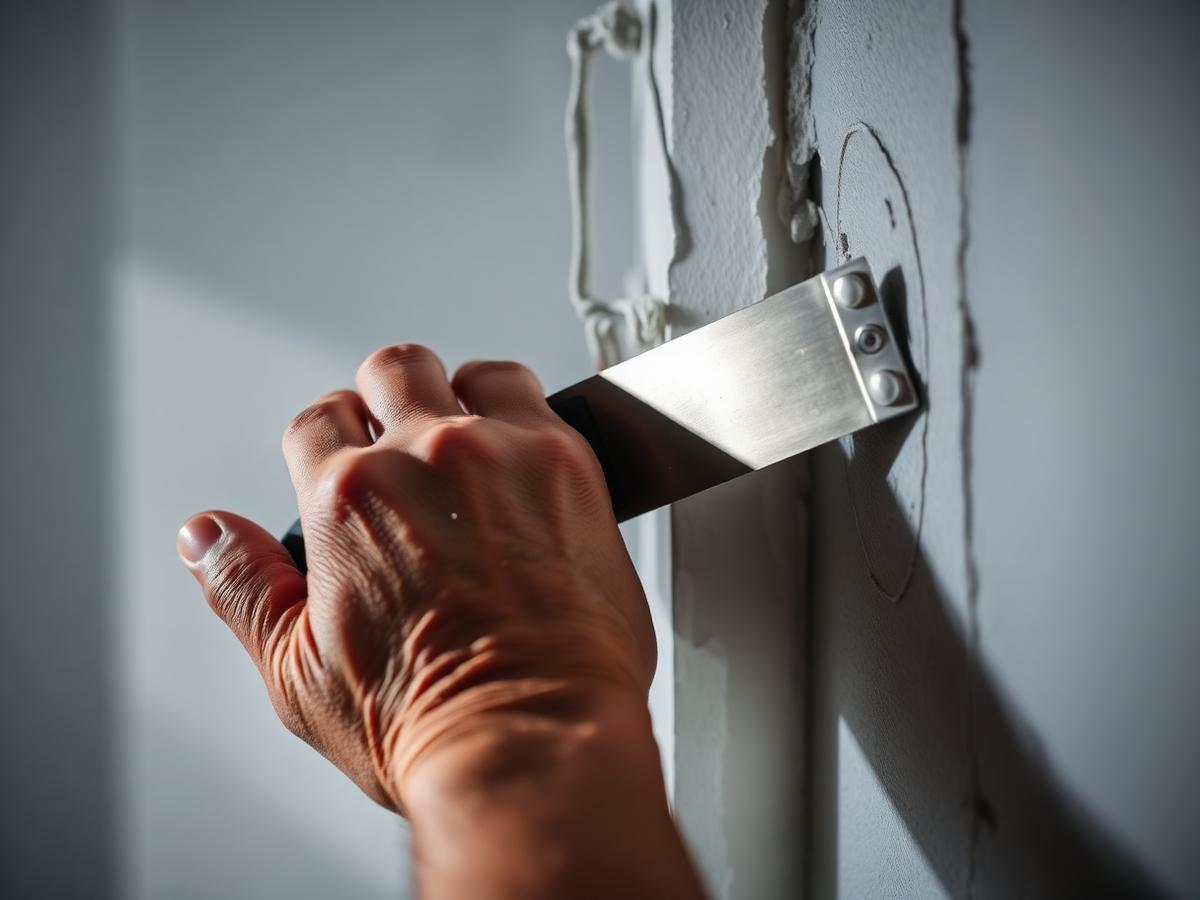
Where a hung wall becomes a finished wall. Paper tape, three coats, sanded smooth, ready for whatever finish level you're after.
Discuss Your Project
Price your drywall taping & mudding
Tell us the scope. We follow up within one business day.
Paper tape is stronger and less prone to cracking than mesh on flat butt and factory-edge seams. We use it where it belongs.
Fast-setting compound for the first coat on butt joints and repairs subject to movement - dries chemically, not by evaporation, so it doesn't shrink and crack.
Metal bead for high-traffic corners, paper-faced bead for finish quality, vinyl for wet areas. Each set true and mudded tight.
8", 12", 16"+ - each coat wider than the last so the transition to flat wall is gradual and invisible.
Rushing between coats is the top cause of failed seams. We schedule around proper dry time - always.
Vacuum-attached sanders, containment on occupied remodels, and thorough cleanup - sanding is the dusty part and we take it seriously.
The hang crew determines the potential; the taper determines the reality. A perfect hang finished poorly still looks wavy. A decent hang finished by a skilled taper can still look excellent. The steps look simple - tape, mud, sand - but the craft is in the details: how thin the bed coat is, how wide each successive coat feathers, whether the tape is bedded in wet compound or laid on dry (a common shortcut that shows up as tape lifting a year later), and whether sanding actually removes ridges instead of just smoothing them.
Paper tape is what we use on flat butt joints, factory tapered seams, and inside corners. It's stronger than fiberglass mesh and doesn't stretch, which is why mesh cracks along seams that see any framing movement. Mesh has one legitimate use in our work: quick repairs where you want to apply compound immediately without a bed coat. For every new-construction and remodel finish job, paper tape is the standard.
Coat 1 (bed coat): thin compound wiped along the seam, tape pressed in and squeezed out with a taping knife so there's compound behind and under it - never on top of dry tape. Coat 2 (fill coat): compound applied 8-10" wide, feathered smooth. Coat 3 (skim/finish coat): compound applied 12-14" wide, feathered smoother, ready for final sanding. Level 5 adds a fourth pass: a full-surface skim coat over the entire wall. Between every coat, full dry time - usually overnight.
Outside corners take abuse - vacuum cleaners, moving furniture, kids' backpacks. The corner bead has to handle that abuse and stay tight to the framing. We use paper-faced metal bead on most residential work (best combination of durability and clean finish), vinyl in wet areas, and heavy-duty metal on commercial or high-traffic locations. Each bead is nailed or crimped tight, then mudded in three coats just like a flat seam.
Sanding is where the reputation of "drywall is messy" comes from. Modern vacuum-attached sanders capture the vast majority of dust at the tool - we run them on all substantial sanding work. For occupied remodels we add plastic containment with zip-doors and negative-air fans where needed. It's still not zero-dust (we're honest about that), but it's dramatically less than pole-sanding into open air.
Paper tape bedded in bed coat compound, corner bead installed and secured on outside corners.
Compound applied 8-10" wide over seams, over screws, over bead. Full dry time.
Compound applied 12-14" wide, feathered smooth, hand-sanded or pole-sanded between coats.
Full inspection under raking light - anything visible gets a touch-up. Then dust wipe and handoff.
Great Lakes Drywall provides drywall taping & mudding across Illinois.
Standard Level 4 finish is three coats over seams (tape/bed, fill, finish) and two over screws. Level 5 adds a fourth coat - a full-surface skim across the entire wall. Fewer coats means visible seams; that's not something we do.
Paper tape is stronger, doesn't stretch, and is far less prone to cracking on butt joints and inside corners. Mesh tape flexes with any framing movement and cracks show up months later. Mesh has its place on quick repairs, but not on new-construction or full-remodel finish work.
Premixed (bucket) compound dries by water evaporation - soft, easy to sand, shrinks as it dries. Setting-type (bag) compound dries chemically like plaster - much harder, doesn't shrink, faster dry time, but harder to sand. We use setting-type for first coats on butt joints and repairs where movement matters, then premixed for finish coats where sanding matters.
A typical room (400 sq ft of drywall) takes 4-6 working days including compound dry time between coats. Whole-house work runs 1-3 weeks depending on square footage. Rushing dry time is the top cause of failed seams - we won't do it.
Yes - including 12'+ ceilings, cathedral peaks, and stairwell walls. We bring proper scaffolding for anything above stepladder range and don't take shortcuts on hard-to-reach seams.
For remodels tying into existing walls, yes - we scuff-sand or prime existing painted surfaces where new work meets old so compound bonds properly. Textured existing walls may need the texture removed at the transition area for a flush finish.
Finishing only typically runs $1.25-$2.25 per sq ft for Level 4 and $2.00-$3.25 per sq ft for Level 5, depending on ceiling height, scope, and access.
With modern vacuum-attached sanders, dramatically less than the old reputation. We run them on all major sanding and add plastic containment on occupied remodels. Still not zero dust - but a fraction of what pole-sanding into open air produces.
Yes. Lake-effect humidity swings, freeze/thaw cycles, and dry winter forced-air heat all move drywall subtly. We plan panel acclimation, use appropriate joint compounds for the season, and time coats so seams don't crack when your house cycles from 65% summer humidity to 20% winter humidity.
Yes - we regularly take over finish work on projects where the hang was done by someone else. We'll walk the hang first and flag anything that'll affect finish quality before we start.
The full range of Great Lakes Drywall specialties - each linked by the keyword our neighbors search for most.
New drywall for additions, remodels, and new construction.
Patching holes, cracks, and damaged sections cleanly.
Smooth, paint-ready walls and ceilings.
Ceiling patches, sags, and water-damaged areas.
Knockdown, orange peel, smooth - matched cleanly.
Removing and replacing drywall after leaks or floods.
Whole-home drywall for renovations, additions, and repairs.
Offices, retail, restaurants, and multifamily.
Turning basements into finished, livable rooms.
Wet-scrape removal, smooth refinish, ready for paint.
Sheetrock is the brand-name gypsum board most Illinois homes are built with. We repair, patch, and install it.
Transparent 2026 pricing for drywall repair across Illinois - by damage type, room, and finish level.
What drywall installation actually costs per square foot across Illinois - by scope, finish level, and room type.
Doorknob holes, small patches, large holes, and every size in between - matched and paint-ready.
Settlement cracks, seam cracks, corner cracks, and stress cracks - fixed so they stay fixed.
Drywall repair coordinated with painting - one crew, one schedule, one warranty.
Free written estimates. Honest timelines. Crews that leave your walls done right the first time.