
Water-damage specialists
We identify wet material with moisture meters, remove only what's compromised, and coordinate with your plumber or roofer to stop the source.
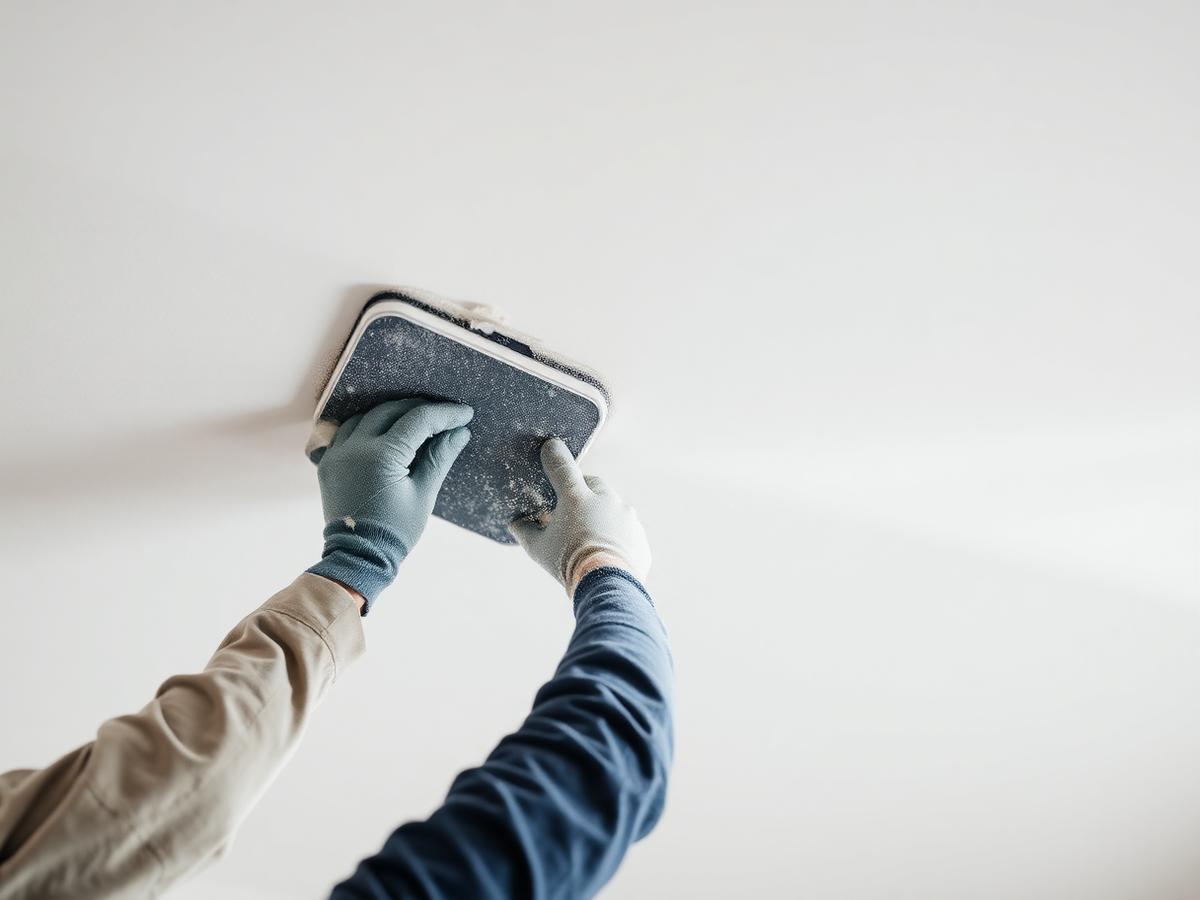
Water stains, sags, cracks, and texture damage on ceilings - repaired and matched so nobody looks up and notices.
Discuss Your Project
Price your ceiling drywall repair
Tell us the scope. We follow up within one business day.
We identify wet material with moisture meters, remove only what's compromised, and coordinate with your plumber or roofer to stop the source.
A sagging ceiling means the panel isn't secured or the wrong panel was used. We fix the root cause - usually re-fastening to joists with adhesive plus screws, or replacing with 5/8" board.
Wet-scrape method with plastic containment. Ceilings smoothed to Level 4 or Level 5 after removal and ready for repaint.
The two most common ceiling textures in Illinois - we sample and match both, and blend into surrounding areas so the patch line disappears.
Plastic floor-to-ceiling on the walls, floor protection, and dust barriers. Overhead work is messy - we keep it contained.
For insurance-related water damage, we work with your restoration company and provide itemized documentation for the claim.
Water stains almost always mean an active or recent leak - plumbing above, roof, HVAC condensate line, or ice dam. Sags mean the drywall isn't properly fastened or it's the wrong weight of board (1/2" on 24" o.c. joists sags over time; ceilings there should be 5/8"). Cracks along seams usually mean framing movement or a taping failure. Popcorn falling off is age plus sometimes moisture. Nail pops mean framing shrinkage or fasteners that missed the joist. Each has a different fix - we diagnose first, patch second.
First: stop the leak (or confirm it's already been stopped) - patching wet drywall doesn't help. Second: identify the extent of wet material with a moisture meter, not by eye - water travels along the underside of the panel farther than the stain shows. Third: cut out all wet or stained material back to solid drywall on joist centers. Fourth: inspect the joists and any exposed framing for mold or damage, address if found. Fifth: install new drywall (moisture-resistant if the source could recur), tape, mud, texture-match, prime.
Popcorn ceilings from before ~1980 may contain asbestos and require testing before removal - we can arrange that testing or you can hire a certified abatement contractor. For post-1980 popcorn (the majority of our jobs), we wet-scrape: mist the ceiling with water, wait for the popcorn to soften, scrape it into a plastic containment tarp, then finish the ceiling smooth (usually Level 4 or Level 5) and prime for repaint. Full plastic containment keeps the mess off your walls and floors.
Most Illinois ceilings are either knockdown (splatter texture applied wet then knocked down flat with a wide trowel) or orange peel (fine sprayed splatter left untouched). Both are matchable when you know the timing, spray pressure, and knockdown pressure the original texturer used. We test on scrap first, dial in the pattern, and blend the patch edges so the texture line disappears. Vintage hand-troweled, swirl, and stipple textures we match as well.
If more than 40-50% of a ceiling is damaged, if the existing panel is 3/8" or 1/2" on wide-spaced joists and sagging, or if there's widespread moisture/mold - replacement is usually the smarter call than patching. We'll tell you honestly which one your ceiling calls for.
Moisture meter, visual inspection of framing above (when possible), scope of damage assessment.
Floor and wall protection, damaged material cut out cleanly, dust contained.
New drywall (moisture-resistant if appropriate), tape, mud through 3 coats, sanded smooth.
Texture matched on samples, applied to blend with surrounding ceiling, primed for paint.
Great Lakes Drywall provides ceiling drywall repair across Illinois.
Small water-stain patches (a few sq ft) typically run $350-$650 including texture match. Larger sections or full-room replacement runs $1,200-$4,500+ depending on square footage, texture type, and ceiling height. We give firm quotes after inspecting the damage.
A single-room water-damage repair usually takes 4-6 working days including compound dry time between coats. Popcorn removal plus smooth refinish typically runs 5-8 days per room. Insurance-scope full ceiling replacement can run longer depending on adjacent-area coordination.
Yes - both are common in Illinois and both are in our regular scope. We sample, mock up on scrap, and match before applying to the ceiling. Old hand-troweled textures we match as well.
Yes - patching wet drywall is a waste of time and money if the leak is still active. If you're not sure whether it's been stopped, we can identify wet material with a moisture meter when we're on site to inform next steps, but the leak fix comes first.
Popcorn ceilings installed before roughly 1980 may contain asbestos and require testing before removal. Testing is affordable ($50-$100 per sample). Post-1980 ceilings are almost always asbestos-free but can be tested for peace of mind. We can arrange testing or work with a certified abatement contractor if needed.
Regularly. We provide itemized invoices with photo documentation, work directly with adjusters, and coordinate with restoration companies. Bring us in early and the claim process is smoother.
Sometimes - if the sag is minor and caused by loose fasteners, we can re-fasten with adhesive plus screws into the joists and finish smooth. Significant sag (more than 1/2" of deflection) usually means the panel needs to come down and be replaced with 5/8" board.
Overhead sanding is the messiest part of any drywall job. We use vacuum-attached sanders, full floor and wall containment with plastic, and clean up daily. It's still not zero dust, but a fraction of what it would be without containment.
Yes. Lake-effect humidity swings, freeze/thaw cycles, and dry winter forced-air heat all move drywall subtly. We plan panel acclimation, use appropriate joint compounds for the season, and time coats so seams don't crack when your house cycles from 65% summer humidity to 20% winter humidity.
Yes - we bring proper scaffolding for anything above stepladder range and take our time on hard-to-reach seams. Cathedral ceiling texture matching is more demanding because the whole ceiling is visible from anywhere in the room; we plan the work accordingly.
The full range of Great Lakes Drywall specialties - each linked by the keyword our neighbors search for most.
New drywall for additions, remodels, and new construction.
Patching holes, cracks, and damaged sections cleanly.
Smooth, paint-ready walls and ceilings.
Clean tape lines, tight corners, flat seams.
Knockdown, orange peel, smooth - matched cleanly.
Removing and replacing drywall after leaks or floods.
Whole-home drywall for renovations, additions, and repairs.
Offices, retail, restaurants, and multifamily.
Turning basements into finished, livable rooms.
Wet-scrape removal, smooth refinish, ready for paint.
Sheetrock is the brand-name gypsum board most Illinois homes are built with. We repair, patch, and install it.
Transparent 2026 pricing for drywall repair across Illinois - by damage type, room, and finish level.
What drywall installation actually costs per square foot across Illinois - by scope, finish level, and room type.
Doorknob holes, small patches, large holes, and every size in between - matched and paint-ready.
Settlement cracks, seam cracks, corner cracks, and stress cracks - fixed so they stay fixed.
Drywall repair coordinated with painting - one crew, one schedule, one warranty.
Free written estimates. Honest timelines. Crews that leave your walls done right the first time.