
Drywall Repair in Plainfield, IL
Patching holes, cracks, and damaged sections cleanly.
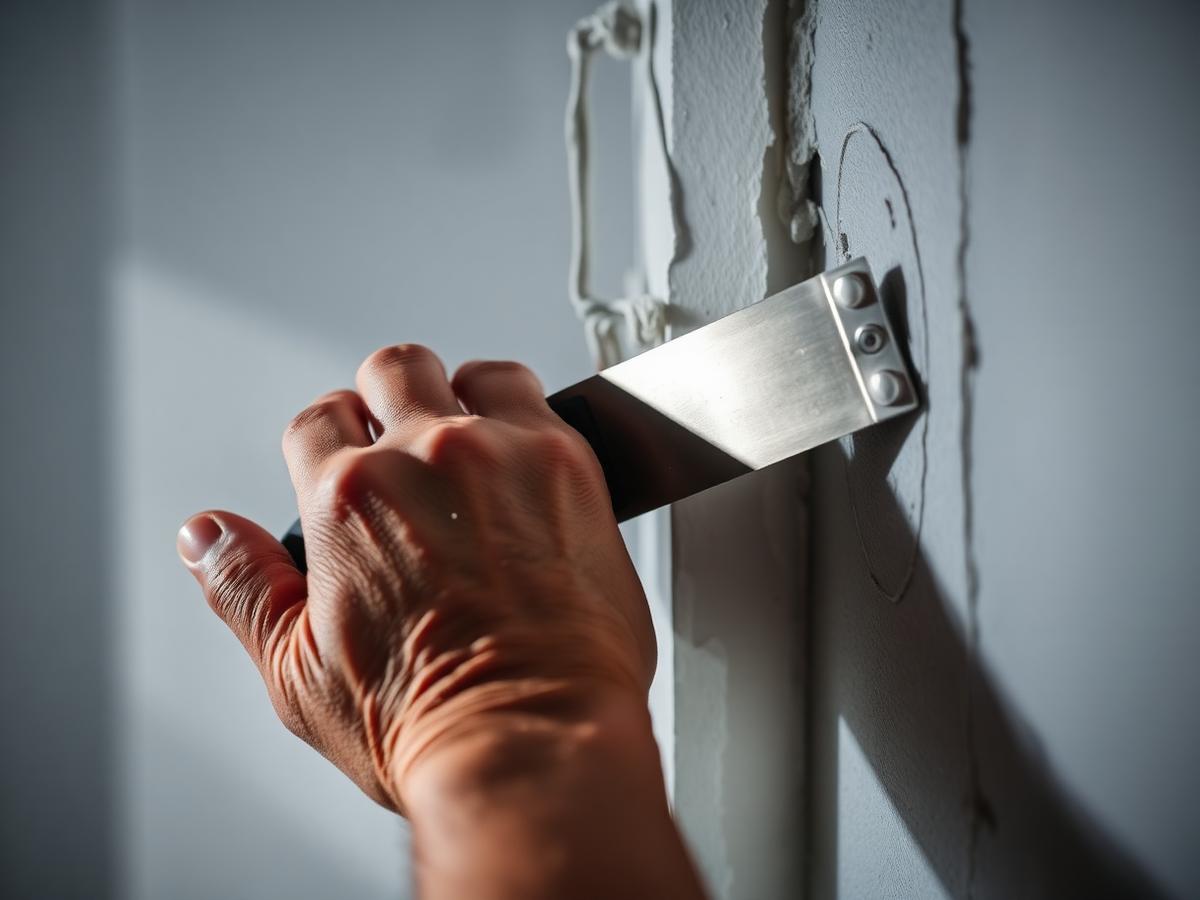
Taping, coating, and skim finishing to a true Level 4 or Level 5 - checked under raking light before it ever sees primer.
Free Estimate
Request a drywall repair or installation quote
Share a few details and we'll follow up within one business day.
Finishing is where a drywall job is won or lost. Anyone can hang board; making a wall read as a single flat plane under Plainfield's low winter sun is a different skill. We finish to the industry levels rather than to a vague promise of smoothness, and we tell you which level a given room actually needs.
Level 4 - tape coat, fill coat, finish coat, sanded - is the correct specification for the majority of a Plainfield home: bedrooms, hallways, most basements, closets, and any surface getting a flat or matte paint. It is not a budget finish; it is the standard.
Level 5 adds a full skim coat across the entire surface so that compound and paper face have the same porosity and there is no telegraphing at joints. In Plainfield we specify it for great rooms with large west-facing windows in Grande Park and Lakelands, walls washed by can lights, stairwell walls lit from a high window, and any surface getting eggshell or satin sheen.
Raking light is any light traveling nearly parallel to a wall - late-afternoon sun through a west window, a row of can lights three inches off the wall, an uplit stairwell, or a wall sconce. It exaggerates any deviation in the plane, and it is exactly the condition present in most of Plainfield's newer great rooms.
A wall that looks perfect at 10am can show every joint at 5pm in February. Before we finish, we walk the room and identify which walls will be raked and at what time of day, and we recommend the finish level per wall rather than per house. It is common for us to finish three walls of a Lakelands great room at Level 4 and the west wall at Level 5.
Paint sheen compounds the effect. Flat paint scatters light and hides minor variation; satin reflects it. If you are set on satin in a high-traffic hallway for scrubbability, the wall behind it needs to be Level 5.
Bedding coat first: paper tape set into compound at every flat and inside corner, with metal or vinyl bead at outside corners. Paper tape rather than mesh, because paper carries far more tensile strength across joints that will move with Will County's seasonal humidity swings.
Fill coat next, wider than the bedding coat, then a finish coat wider still. Each coat gets dry time - and in a Plainfield winter with forced-air heat that is faster than in a humid July basement. Rushing coats produces shrinkage cracking at seams months after the painter has gone.
Sanding is done under a raking work light, not overhead light, which is the only way to catch the ridges you would otherwise discover after primer. On a Level 5 job the skim coat goes on after that and gets its own sanding pass.
Finishing into an existing wall is harder than finishing new construction, because you have to match a plane you did not create. On a smooth wall we feather 24 inches or more past the repair and check it under a work light held flat to the surface.
On textured walls the finish has to be flat before texture goes on - texture hides fine variation but exaggerates a hump. We finish the patch to Level 4 flatness first, then match the knockdown or orange peel on a sample board before spraying.
In the older housing near downtown Plainfield we frequently finish drywall into plaster. That takes a build-out to the plaster plane with setting-type compound rather than simply taping the transition, and it is the difference between a repair that disappears and one that leaves a visible ridge.
Retail, medical, and office tenants along Route 59, Route 30, and Caton Farm Road usually specify Level 4 in back-of-house areas and Level 5 in customer-facing spaces with feature lighting. We work to the architect's finish schedule and to the paint manufacturer's substrate requirements.
Occupied-center work runs after hours with containment so sanding dust does not migrate into neighboring suites. Dustless sanding on vacuum is standard on any occupied commercial finishing job.
Every commercial job gets primed before handoff so the painter's coverage is predictable and there is no flashing at joints under LED lighting, which is far less forgiving than the fluorescent it replaced.
We identify which walls get raking light and at what time of day, then set the finish level wall by wall.
Paper tape set in compound at flats and corners; bead at outside corners.
Two more progressively wider coats, each fully dried, with the schedule adjusted for the season.
Level 5 walls get a full skim coat so compound and paper face take paint identically.
A work light held flat to the wall catches ridges that overhead light hides until after primer.
Uniform primer, then a walkthrough with a light in hand so you sign off before the painter starts.
Plainfield's residential base skews new - Grande Park, Lakelands, Wallin Woods, and Fairfield Ridge are all 1990s-and-newer subdivisions - with a smaller pocket of older homes near the downtown Lockport Street core. The commercial base is retail-heavy along Route 59 and Route 30, with medical and office space clustered near the Caton Farm Road corridor. ZIP 60586 anchors the south and west sides; 60585 covers the north side and 60544 covers the east.
Will County freeze-thaw cycles, heating-season low humidity, and heavy summer HVAC loads all stress drywall assemblies - basement walls and second-floor ceilings both crack seasonally, generating steady repair work across Grande Park, Lakelands, and the downtown core.
For the full picture of everything our crews handle locally, see our drywall contractor page for Plainfield, IL, or read the statewide detail on drywall finishing across Illinois.
Level 4 is three coats over tape and fasteners, sanded, ready for flat paint. Level 5 adds a full skim coat over the entire surface so joints cannot telegraph under raking light or reflective paint sheens.
If it has large west-facing windows or can lights washing a wall, yes on at least those walls. It is common for us to finish three walls of a Grande Park or Lakelands great room at Level 4 and the raked wall at Level 5.
Yes - we feather 24 inches or more past the repair and check the plane under a raking work light before priming, which is the step most patch jobs skip.
Almost always a finish coat that was too narrow, mesh tape without a proper bedding coat, or sanding done under overhead light. All three are fixable with a skim coat over the affected area.
Three coats with real dry time between them means about a week of calendar for a single room, longer in a humid basement and faster in dry winter heat.
Paper tape bedded in compound. Paper carries far more tensile strength across joints that move with Will County's seasonal humidity swings, which is why our joints stay closed.
Yes. Priming equalizes porosity between compound and paper face so the painter's first coat covers evenly and there is no flashing at the joints under LED lighting.
Yes - Route 59, Route 30, and Caton Farm Road retail, medical, and office suites, finished to the architect's schedule with after-hours dustless sanding in occupied centers.
Patching holes, cracks, and damaged sections cleanly.
New drywall for additions, remodels, and new construction.
Ceiling patches, sags, and water-damaged areas.
Removing and replacing drywall after leaks or floods.
Turning basements into finished, livable rooms.
Sheetrock is the brand-name gypsum board most Illinois homes are built with. We repair, patch, and install it.