
Drywall Repair in Plainfield, IL
Patching holes, cracks, and damaged sections cleanly.
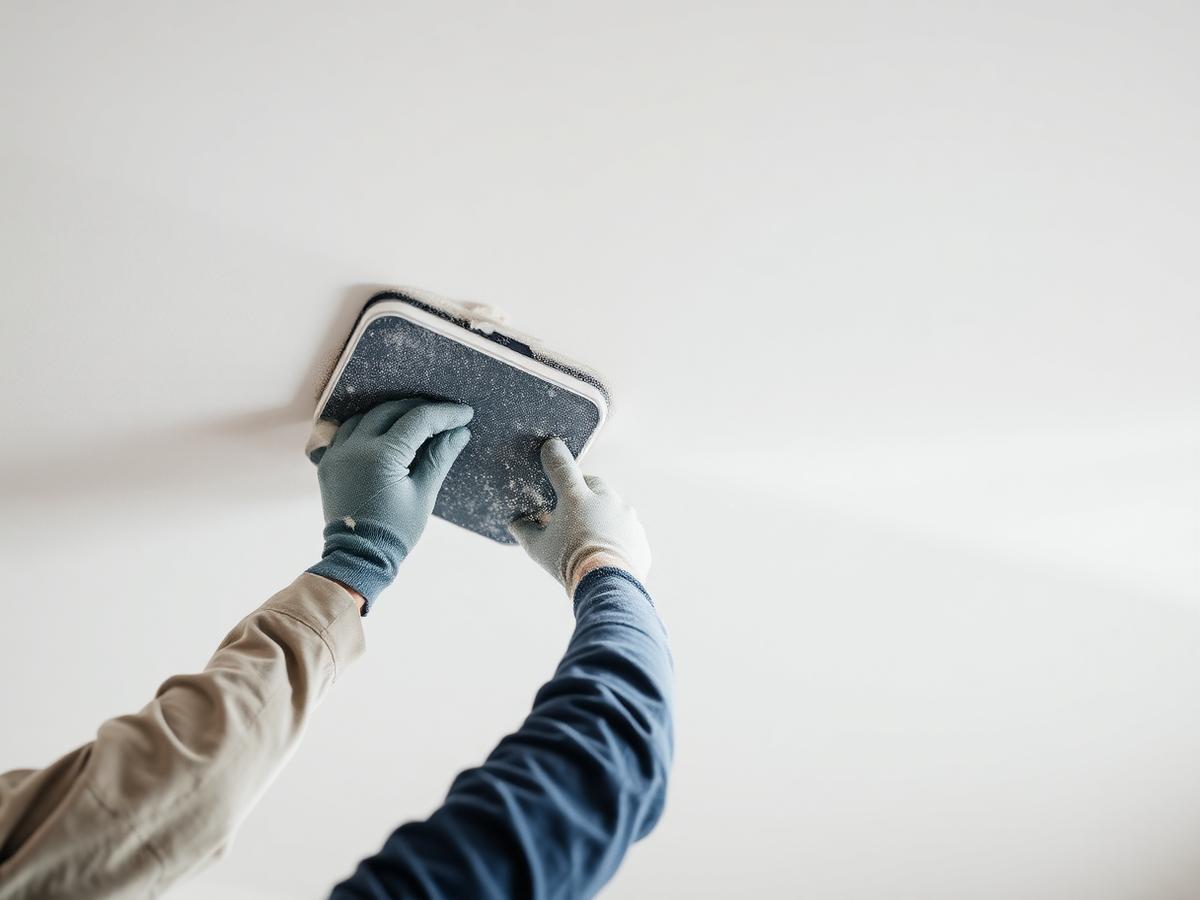
Ice dam ceilings, burst-pipe walls, and basement seepage rebuilt properly - dried and metered first, so nothing gets closed up wet.
Free Estimate
Request a drywall repair or installation quote
Share a few details and we'll follow up within one business day.
Water damage in Plainfield has a seasonal rhythm. January and February bring ice dams: snow melts on a warm roof deck, refreezes at the cold eave, and backs water under the shingles into the wall and ceiling below. We see it most in the older housing near the Lockport Street core, where attic insulation and ventilation were never upgraded, but newer Grande Park and Lakelands homes with complex roof geometry get it too at valleys and dormers.
Spring and summer bring the other two sources: heavy rain finding a flashing failure, and burst or leaking supply lines. Plainfield's newer subdivisions have a lot of second-floor laundry rooms and second-floor baths, and a supply line failure up there travels through the first-floor ceiling and often into a wall cavity before anyone notices.
The fourth source is basements. Grande Park, Lakelands, and Wallin Woods basements are dry most years, but a sump failure or a heavy Will County storm can put a few inches of water on a finished basement floor, and drywall wicks it up the wall well above the visible line.
This is the part that separates a real repair from an expensive callback. Gypsum board and the framing behind it hold water long after the surface feels dry. We use a moisture meter on the framing, the insulation, and the adjacent board, and we do not close a cavity that still reads wet - no matter how much everyone wants the room back.
Wet insulation does not dry in place inside a closed wall. It gets removed. Wet framing gets air movement until it meters down to normal for the season. If organic growth is already visible, that gets addressed before board goes up, not painted over.
We also require that the source is fixed first. Repairing a Plainfield ceiling under an active ice dam or an unrepaired flashing failure means the same ceiling comes down next winter, and we would rather sequence it correctly than take the job twice.
More than the stain suggests, almost always. Water travels laterally along the top of a ceiling board and down inside a wall cavity, so the visible stain is the smallest part of the affected area. We cut back to sound, dry board and to a framing member so the new sheet has something to fasten to.
On ceilings we typically remove the full width between two trusses and to the nearest joint rather than cutting a small square, because a patch surrounded by four butt joints on a ceiling is far more visible than a clean full-width replacement. On walls we usually cut horizontally at a consistent height across the affected bays, which produces one straight seam instead of a patchwork.
If saturated board covers most of a ceiling plane, full replacement is often cheaper than piecing it and always looks better. We will tell you which side of that line your Plainfield job falls on before you commit.
A water stain will bleed straight through latex primer and latex paint. Weeks later the brown ring reappears and the homeowner assumes the leak came back. The fix is a shellac or oil-based stain-blocking primer over any stained surface that is staying, before a single coat of finish paint.
New board gets primed too, so the porosity of the fresh compound matches the surrounding surface and the finish coat does not flash. Then the whole ceiling plane or the whole wall gets painted - not just the repaired section - because ceiling flat and wall paint both age.
Texture is matched to whatever is already there: knockdown, orange peel, smooth, or hand-applied in the older downtown Plainfield homes. Always tested on a sample board first.
Most Plainfield water-damage jobs we do involve a homeowners claim. We write itemized estimates that separate demolition, drying coordination, board replacement, finishing, texture, primer, and paint, which is the level of detail adjusters expect and which makes supplements far easier if we open a wall and find more damage than the adjuster scoped.
We photograph everything before it is covered - the wet framing, the meter readings, the removed insulation - so there is a documented record. We do not represent you to your carrier, but we give you documentation that stands up.
Emergency and next-day scheduling is available for active damage. Hours are 8am to 7pm, seven days a week, and we cover Plainfield along with Joliet, Shorewood, Crest Hill, Romeoville, Bolingbrook, Oswego, and Naperville.
Roof, flashing, ice dam, or plumbing - we do not rebuild under an active leak.
Moisture readings on framing and insulation determine how far the removal goes.
Wet insulation out, air movement in, and readings taken until the assembly is back to normal for the season.
5/8-inch on ceilings, moisture-resistant where the condition warrants, back-blocked at butt joints.
Shellac or oil-based primer over any stained surface staying in place, before finish paint touches it.
Matched texture, full-plane repaint, and photos of everything that got covered for your records.
Plainfield's residential base skews new - Grande Park, Lakelands, Wallin Woods, and Fairfield Ridge are all 1990s-and-newer subdivisions - with a smaller pocket of older homes near the downtown Lockport Street core. The commercial base is retail-heavy along Route 59 and Route 30, with medical and office space clustered near the Caton Farm Road corridor. ZIP 60586 anchors the south and west sides; 60585 covers the north side and 60544 covers the east.
Will County freeze-thaw cycles, heating-season low humidity, and heavy summer HVAC loads all stress drywall assemblies - basement walls and second-floor ceilings both crack seasonally, generating steady repair work across Grande Park, Lakelands, and the downtown core.
For the full picture of everything our crews handle locally, see our drywall contractor page for Plainfield, IL, or read the statewide detail on water-damaged drywall repair across Illinois.
Only if the board is structurally sound and the cavity meters dry. In that case we seal with a shellac or oil-based stain blocker and repaint the plane. If the board is soft, sagging, or the cavity is still wet, it comes out.
Usually a few days of drying, depending on how much water got in and the season. We take meter readings rather than guessing, because closing a wet cavity produces mold and a second repair.
Yes - it is our most common Plainfield water-damage call in January and February. We repair the ceiling and wall damage and flag the attic ventilation or insulation problem that caused the dam so it does not repeat.
Sudden and accidental damage is usually covered; long-term seepage usually is not. We provide itemized, photo-documented estimates that adjusters can work from, though we do not handle the claim for you.
Yes. After a sump failure or storm seepage we remove board above the wet line, dry the framing, and rebuild with moisture-resistant or paperless board at the foundation wall.
Small surface growth on framing is addressed before we close up. Larger contamination needs a remediation contractor first - we will tell you plainly which one you are looking at rather than covering it.
More than the stain shows. We cut to sound board and to a truss, usually full-width between trusses, because that produces a clean seam instead of a patchwork that shows under can lights.
Yes. Active water damage is prioritized, and we work 8am to 7pm seven days a week across Plainfield and the surrounding Will and Kendall County towns.
Patching holes, cracks, and damaged sections cleanly.
New drywall for additions, remodels, and new construction.
Ceiling patches, sags, and water-damaged areas.
Turning basements into finished, livable rooms.
Smooth, paint-ready walls and ceilings.
Sheetrock is the brand-name gypsum board most Illinois homes are built with. We repair, patch, and install it.