
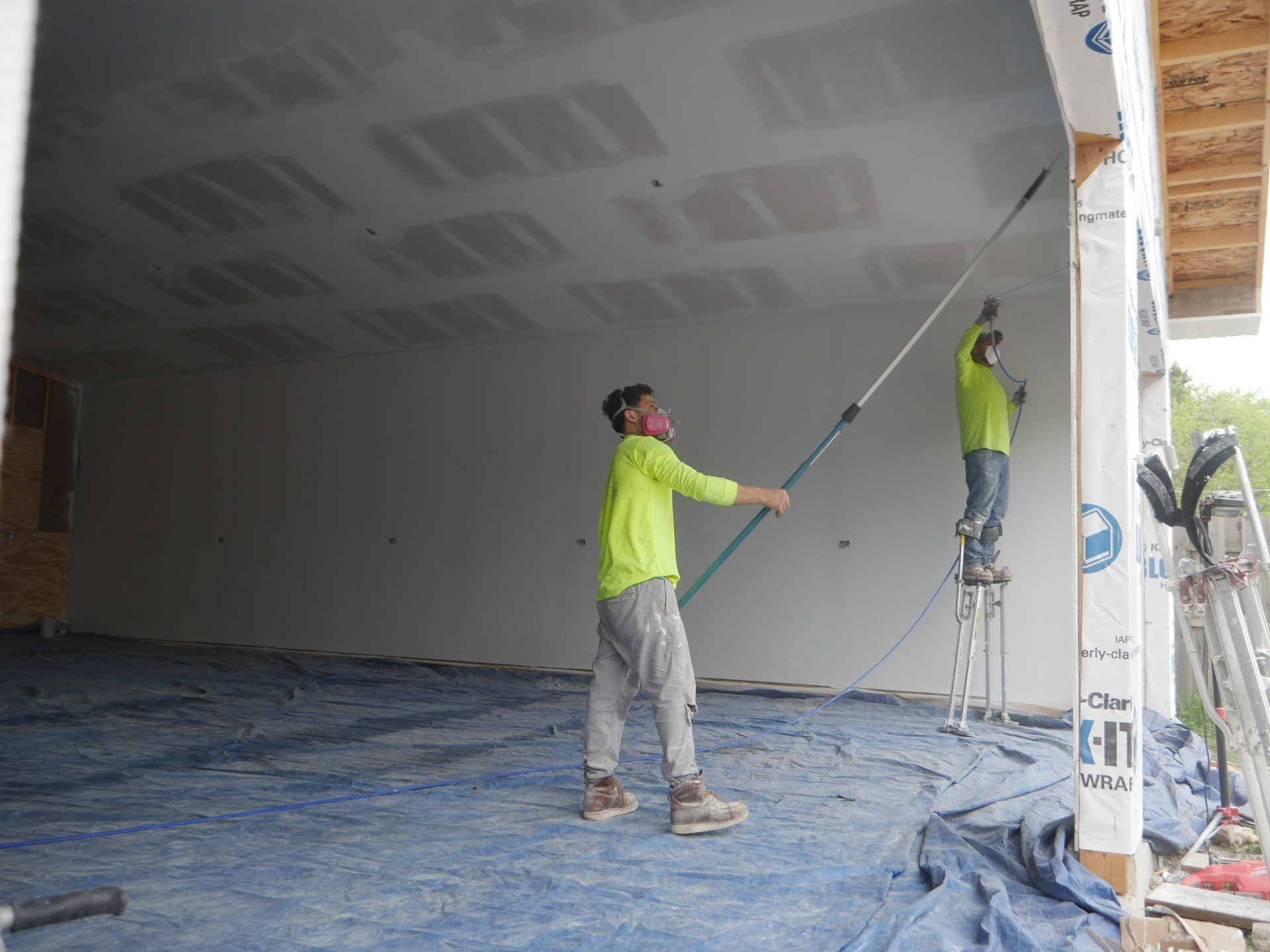
Drywall dust is the part of a repair homeowners remember. The patch takes an afternoon; the dust shows up on bookshelves two rooms away for weeks if nobody planned for it. Containment is a real part of the scope on every drywall repair we do in occupied homes.
Is drywall dust harmful?
Joint compound dust is mostly gypsum, limestone, talc, and mica. It is a strong respiratory and eye irritant and unpleasant for anyone with asthma, and some compounds contain crystalline silica, which is why federal workplace rules require dust controls and respiratory protection during sanding - see the OSHA respirable crystalline silica standard. For homeowners it means: leave the room during sanding, keep kids and pets out, and do not run the furnace while dust is airborne.
How professional drywall dust containment works
- Seal the work area with 6 mil plastic and a zippered entry, floor to ceiling
- Cover and tape supply and return vents so the HVAC system does not distribute dust through the house
- Set up negative air with a HEPA-filtered air scrubber exhausting outside or filtering in place
- Protect floors with rosin paper or ram board, not just a drop cloth that shifts underfoot
- Sand with a vacuum-assisted pole sander connected to a HEPA vacuum
- Wet-sponge finish sanding on small repairs, which produces almost no airborne dust
- HEPA vacuum every surface, then wipe with a damp microfiber, then vacuum again after 24 hours once suspended dust settles
Dustless drywall sanding: what it really means
There is no such thing as zero dust, but vacuum-assisted sanding captures the large majority at the source. On skim coats and popcorn ceiling removal - the dustiest job in the trade - it is the difference between a one-room cleanup and a whole-house one. Wet sanding with a damp sponge is the other low-dust option; it is slower and leaves a slightly softer profile, so we use it on small patches rather than full walls.
How to clean up drywall dust that escaped
- Vacuum first with a HEPA filter - a standard shop vac blows fine dust straight back into the air
- Never dry-sweep; it re-suspends everything you are trying to remove
- Wipe walls and trim top to bottom with a barely damp microfiber, rinsing often
- Change the furnace filter after the job, and again a month later
- Wash soft goods - curtains and bedding hold dust longer than hard surfaces
- Mop hard floors with clean water twice, since the first pass mostly makes gypsum slurry
Questions worth asking your drywall contractor
Ask whether containment and HEPA vacuum sanding are included in the quote or billed separately, whether vents get sealed, and who does final cleanup. Those answers separate a finish contractor from a handyman - a distinction we cover in drywall handyman vs drywall contractor.
We contain and clean as part of the job on repairs and remodels across Plainfield, Naperville, and Orland Park.
Frequently Asked Questions
Is drywall dust harmful to breathe?
+
It is a significant respiratory and eye irritant, and some joint compounds contain crystalline silica, which is regulated during sanding. Stay out of the room while sanding is happening and keep children and pets away until cleanup is complete.
How do you contain drywall dust in an occupied home?
+
Seal the room with 6 mil plastic and a zippered entry, tape off HVAC supply and return vents, run a HEPA air scrubber for negative pressure, and sand with a vacuum-assisted sander connected to a HEPA vacuum.
Is dustless drywall sanding really dustless?
+
No, but vacuum-assisted sanding captures most dust at the source. Combined with containment and wet sanding on small areas, it keeps cleanup to the work room instead of the whole house.
How do you clean up drywall dust properly?
+
HEPA vacuum first, never dry-sweep, wipe surfaces with a barely damp microfiber top to bottom, mop hard floors twice, change the furnace filter, and vacuum again a day later once suspended dust settles.
Should HVAC vents be covered during drywall work?
+
Yes. An open return will pull fine dust into the ductwork and redistribute it through the entire house every time the system runs. Vents should be sealed before any sanding starts.
Does drywall dust ruin a furnace filter?
+
It loads a filter quickly and restricts airflow. Plan on replacing the filter right after the job and again about a month later as residual dust works through the system.