
Bathrooms, garages, and showers each break drywall in a different way - and each demands a specific board, a specific process, and a specific Illinois code detail that a generic 'drywall repair' scope usually misses. Here's what to specify for each room across Illinois.
Bathroom drywall repair in Illinois
Bathroom drywall repair is almost always tied to moisture - humidity from long showers, exhaust fans that don't move enough air, small toilet supply leaks, or slow drips from a second-floor bath. Standard 1/2" gypsum board is the wrong material for the wet zone (behind tile in a shower or tub surround) and for humid areas that don't ventilate well. The right specs:
- Wet zone behind tile (shower, tub surround): cement board or purpose-made tile backer - never drywall of any kind
- Humid bathroom walls outside the wet zone: moisture-resistant paperless drywall (fiberglass-faced)
- Bathroom ceiling with an exhaust fan: 5/8" moisture-resistant board, sealed edges around the fan cutout
- Bathroom ceiling without a working fan: recommend a fan upgrade before drywall repair - otherwise the repair fails within a year
Bathroom water-damaged drywall repair almost always requires cutting back to sound material, drying the framing, and confirming the underlying leak is fixed before any new board goes up.
Bathroom ceiling drywall repair after a second-floor leak
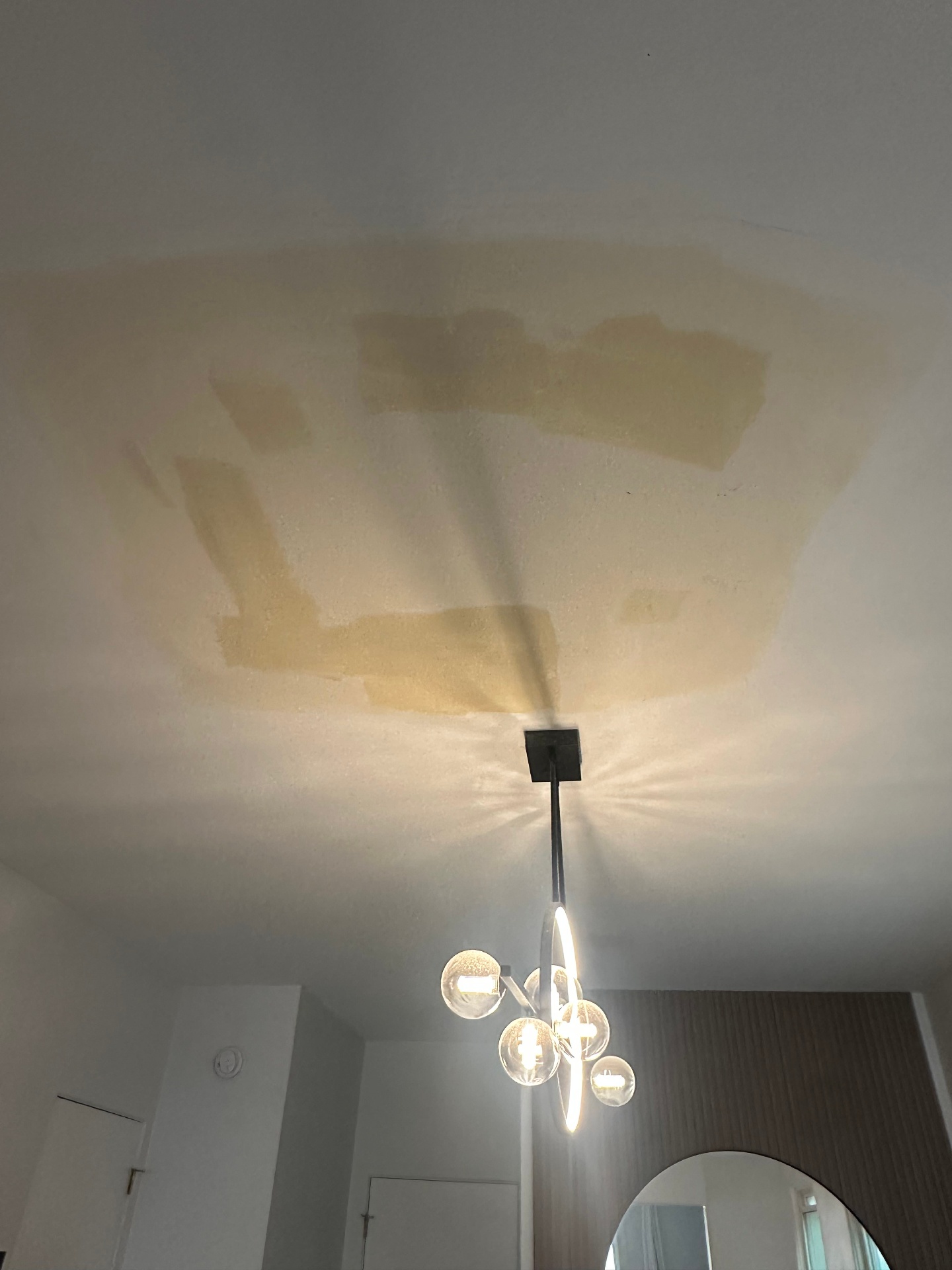
The most common bathroom-adjacent Illinois drywall repair we do is actually the ceiling below a second-floor bath - not the bathroom itself. Toilet wax rings fail, tub drains loosen, and shower valves seep. The first sign is usually a stain or bubbling paint on the ceiling below. Fix the plumbing first (a plumber, not us). Then cut out any wet drywall, confirm the joist bays are dry, and rebuild with 5/8" ceiling board. Runs $650-$1,600 in Illinois depending on ceiling texture and access.
Garage drywall repair in Illinois - code and process
Garages break drywall in three ways: car doors and bumpers hitting walls, unheated freeze-thaw cycling that opens seams, and moisture from stored wet gear (winter tires, snowblowers). Illinois residential garages are subject to specific IRC-adopted fire-rating requirements you have to know:
- Any wall or ceiling shared between the garage and living space requires 5/8" Type-X fire-rated drywall by Illinois-adopted IRC
- Ceiling of an attached garage with living space above: 5/8" Type-X, taped to Level 1 minimum for fire-integrity
- Non-shared garage walls: 1/2" standard drywall is fine (but 5/8" holds up better to bumps)
That means a garage drywall repair that touches a shared wall isn't optional on the board spec - if the original was Type-X (and it should have been), the repair has to be Type-X too. Garage drywall repair in Illinois usually runs $275-$750 depending on hole size and whether it's a Type-X shared wall.
Garage ceiling drywall repair
Garage ceilings sag when standard 1/2" is installed on 24" o.c. framing (very common in Illinois post-1970 tract garages). Sag isn't a repair - it's a re-hang with 5/8" Type-X. If your garage ceiling is drooping, don't patch the sag; replace the panels. Full re-hang of a two-car garage ceiling in Illinois runs $1,800-$3,400 depending on cathedral vs flat and access to remove the old panels.
Shower drywall repair - and the myth
The truth: there should not be drywall inside a shower or tub surround. Ever. If you have drywall behind your tile in a wet zone, the tile is holding water against the paper facing of the drywall and it's a matter of time before the whole assembly fails. "Green board" (moisture-resistant paperlike drywall) is not appropriate behind tile in a wet zone - it's for humid rooms, not standing-water contact.
If the shower tile is intact and something's leaking outside the wet zone (the wall above the tile, the drywall next to the tub apron), that's normal moisture-resistant drywall repair. If the drywall behind the tile is wet, the tile has to come out and the substrate has to be rebuilt with cement board or purpose-made tile backer. Shower drywall repair in Illinois runs $425-$1,200 for the drywall portion, plus tile work if the substrate has to be rebuilt (which is a tile contractor scope, not ours).
What to ask on an Illinois estimate for these three rooms
- Bathroom: "What board are you using outside the wet zone, and what's the plan for the wet zone if there's tile?"
- Garage: "Is this a shared wall or ceiling with living space? If yes, are you installing 5/8" Type-X?"
- Shower: "Are you touching anything inside the tile wet zone? If yes, what's the substrate rebuild plan?"
Frequently Asked Questions
What kind of drywall goes in a bathroom in Illinois?
+
Moisture-resistant paperless (fiberglass-faced) drywall on humid walls outside the wet zone. Cement board or purpose-made tile backer behind tile in the wet zone - never drywall of any kind. 5/8" moisture-resistant board on bathroom ceilings with an exhaust fan.
Does garage drywall repair need special board in Illinois?
+
Any wall or ceiling shared between the garage and living space requires 5/8" Type-X fire-rated drywall by Illinois-adopted IRC. Non-shared garage walls can use 1/2" standard, but 5/8" holds up better to bumps and impacts.
Can you repair drywall inside my shower?
+
There shouldn't be drywall inside a shower or tub surround wet zone in the first place. If there is, the tile has to come out and the substrate has to be rebuilt with cement board or purpose-made tile backer. That's a tile contractor scope; we handle the drywall side outside the wet zone.
How much does bathroom drywall repair cost in Illinois?
+
Bathroom wall drywall repair (outside the wet zone) runs $275-$750 depending on hole size and moisture-resistant board vs standard. Bathroom ceiling drywall repair after a leak from a second-floor bath runs $650-$1,600 all-in.
How much does garage drywall repair cost in Illinois?
+
Garage drywall repair runs $275-$750 depending on hole size and whether the wall is Type-X shared with living space. Full ceiling re-hang for a sagging garage ceiling runs $1,800-$3,400 in Illinois.
Why is my bathroom ceiling drywall bubbling?
+
Almost always long-term moisture - either from the bathroom's own humidity without adequate exhaust, or from a slow leak in the plumbing on the floor above. Fix the moisture source first, then repair the drywall. Patching over active moisture just delays the failure by a few months.