
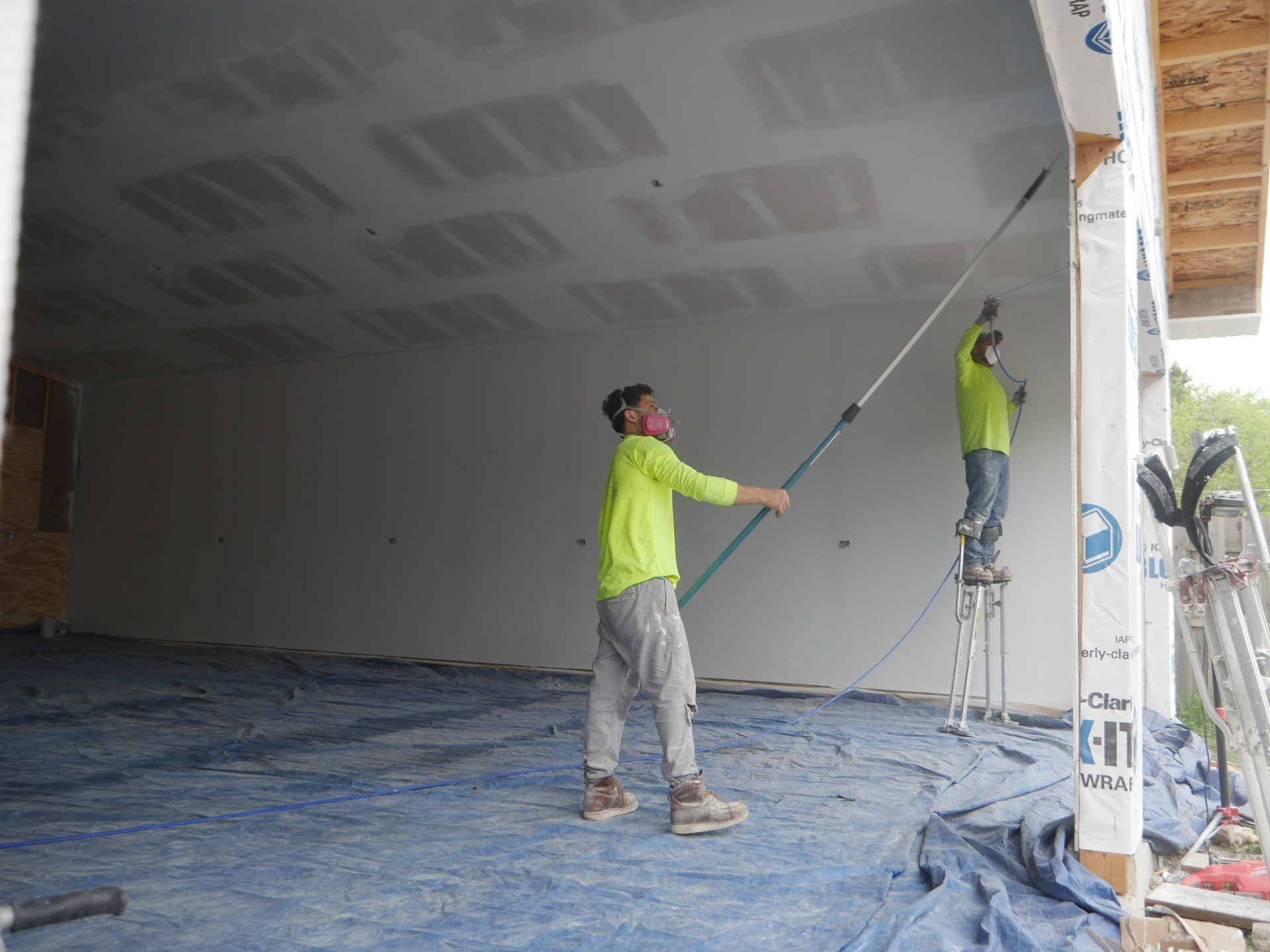
Torn drywall paper is the most common damage we see after wallpaper removal, tile demo, or someone pulling painter's tape off fresh paint. The fuzzy brown surface left behind is the gypsum core's facing, and it will drink moisture out of anything you put on it. That is why a patch over unsealed torn paper bubbles within an hour.
Why torn drywall paper has to be sealed first
The face paper is a moisture barrier as much as a surface. Once it is torn open, joint compound and latex paint push water straight into the exposed gypsum, and the loose paper fibers swell, lift, and bubble. Sealing locks the fibers down and stops the core from absorbing the water in your compound.
How to repair torn drywall paper step by step
- Cut away loose flaps with a sharp utility knife rather than tearing them - a clean edge feathers, a torn edge telegraphs
- Lightly sand the fuzz flat with 150 grit, just enough to knock down raised fibers
- Seal the whole damaged area with an oil-based or shellac stain-blocking primer, or a purpose-made drywall sealer - not latex primer, which raises the fibers again
- Let it cure fully, usually two to four hours depending on the product
- Skim two thin coats of lightweight compound across the area, feathering 8 to 12 inches past the damage
- Sand smooth, prime again, and paint the full wall so sheen matches corner to corner
When a skim coat is not enough
If the gypsum core is gouged, crumbling, or the tearing covers most of a wall, patching each spot becomes slower and uglier than a full skim coat and drywall finishing pass over the whole plane. Our rule of thumb: more than about 30% of a wall damaged, skim the whole wall to a Level 4 or Level 5 surface. See Level 4 vs Level 5 drywall finish for which one to target.
Wallpaper removal damage in older Illinois homes
Homes in Wheaton, Downers Grove, and older Naperville neighborhoods frequently had wallpaper hung directly over unprimed drywall in the 1980s and 90s. There is no barrier between the paste and the face paper, so removal takes the paper with it across entire walls. A full skim coat is usually the fastest path to a paint-ready surface in those houses, and it also lets you leave the walls smooth instead of re-texturing.
Mistakes that make torn paper worse
- Priming with latex first, which re-wets and lifts the fibers you are trying to lock down
- Loading one thick coat of compound instead of two thin ones, guaranteeing shrinkage cracks
- Sanding aggressively and cutting deeper into the core
- Painting a repaired patch without repainting the full wall, leaving a visible sheen halo
- Texturing over unsealed paper, which bubbles under the texture and has to be scraped off - see drywall texture matching
Stripped wallpaper and now facing a whole room of fuzzy walls? We skim, sand, and hand off paint-ready surfaces across Plainfield and the surrounding suburbs.
Frequently Asked Questions
How do you fix torn drywall paper?
+
Trim loose flaps with a sharp knife, lightly sand the fuzz, seal with an oil-based or shellac primer, then skim two thin coats of compound feathered well past the damage, sand, prime, and repaint the wall.
Why does my patch bubble over torn drywall paper?
+
Because the exposed gypsum core absorbed water out of the compound or paint and the loose fibers swelled. Sealing the torn area with a non-water-based primer before patching prevents it.
Can I use latex primer on torn drywall paper?
+
Not as the sealing coat. Latex is water-based and re-wets the very fibers you are locking down. Use an oil-based or shellac stain-blocking primer, or a dedicated drywall sealer, then latex after.
Do I need to skim coat the whole wall after wallpaper removal?
+
If more than roughly 30% of the wall is torn, a full skim coat is faster and looks better than dozens of individual patches. Below that, spot repairs blend fine.
Can you paint directly over torn drywall paper?
+
No. Paint soaks into the exposed core and the raised fibers show through as a rough, blotchy surface. The area has to be sealed and skimmed first.
How long does torn drywall paper repair take?
+
A single wall usually takes two visits across two days - seal and first coat one day, second coat, sanding, and priming the next, so each layer cures properly.