
Drywall Repair in Crest Hill, IL
Patching holes, cracks, and damaged sections cleanly.
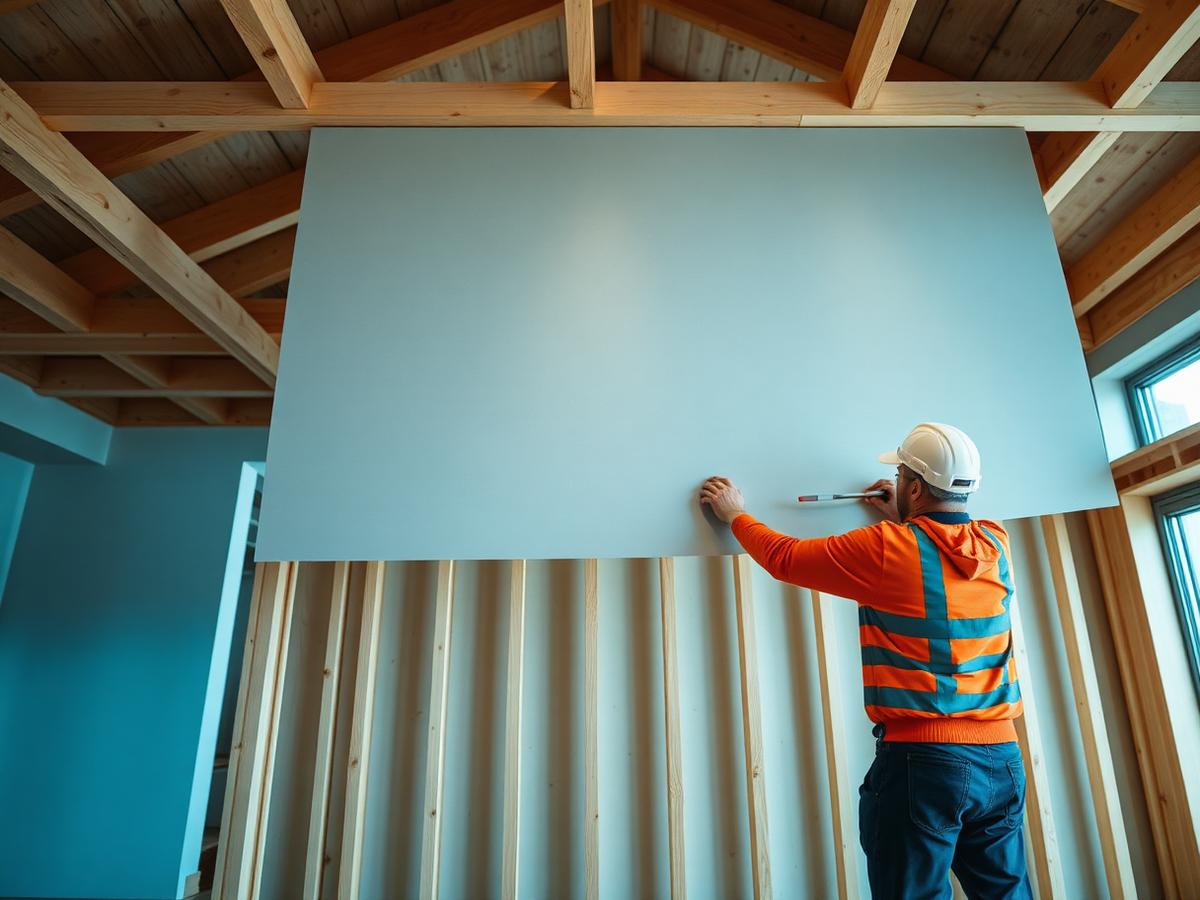
New drywall hung, taped, and finished across Crest Hill's 60403 and 60441 ZIPs, from Caton Farm basement finishes to Weber Road townhome remodels and Broadway Street additions.
Free Estimate
Request a drywall repair or installation quote
Share a few details and we'll follow up within one business day.
The newer single-family homes near Caton Farm and Renwick Road generate a steady stream of basement finish and bonus-room installation work, since these lots typically have full basements that were left unfinished at construction. The framing is square and consistent, which lets our crews move efficiently from hang to tape to finish on a predictable schedule.
Along Broadway and Theodore Street, where the postwar ranches and split-levels sit, installation work is often a room addition, a garage conversion, or finishing attic space that wasn't part of the original floor plan. Framing in these homes is older and occasionally out of square, so we string-line and shim before hanging board rather than trying to correct it later with extra mud.
The Weber Road corridor's townhomes and duplexes bring a different kind of installation job: interior remodels, closet reconfigurations, and shared-wall repairs where fire-rated or sound-rated assemblies have to be matched to what's already in place between units.
Basement walls near Caton Farm and Renwick Road sit against slab and foundation that stays cooler than room air most of the year, so we specify moisture-resistant or paperless board on those surfaces and the lower few feet of any nearby partition. Standard paper-faced board in that spot tends to grow mold behind paint within a few Illinois winters.
Weber Road corridor townhomes and duplexes need fire-rated Type X board at party walls and garage separations, matched to the existing assembly's rating rather than substituted with standard board. Bathrooms throughout Crest Hill get cement board or an approved backer in wet areas and moisture-resistant board everywhere else in the room.
For ceiling spans in vaulted rooms near Caton Farm we specify 5/8-inch board over 24-inch truss spacing, since half-inch board sags over a humid Will County summer. We also plan sheet layout so butt joints land in the least visible plane and get back-blocked to avoid telegraphing through the finish coat.
A single room addition or a bedroom near Broadway or Theodore Street typically runs a hang day, a tape day, and two to three finish visits spaced for drying time, plus sanding - about a week of calendar time even though it's only a few days of hands-on labor. Compound simply needs to dry between coats regardless of how quickly we can work.
A finished basement near Caton Farm or Renwick Road usually takes two to three weeks from first sheet to sanded and primed, depending on how many soffits and duct chases need to be boxed in. A garage or attic conversion on an older Broadway ranch runs longer because of the framing and insulation work that has to happen first.
Will County's dry winter heat speeds drying between coats, while humid summer months slow it down, so we build the coat schedule around the season instead of promising an identical timeline year-round.
Most bedrooms, hallways, and basement rooms across Crest Hill get a Level 4 finish - three coats over tape and fasteners, sanded and ready for flat or matte paint - which is the industry standard and holds up well under everyday room lighting. Level 5, a full skim coat over the whole surface, earns its extra labor in specific rooms: basement family rooms with can lighting near Caton Farm, and any wall getting an eggshell or satin sheen where raking light would expose every joint.
Installation pricing scales with square footage and finish level, and larger jobs like basement finishes or additions get a written, itemized estimate that separates hang, tape, and finish labor so you can see where the cost sits. Townhome remodels along Weber Road that involve matching an existing fire-rated wall price differently than a straightforward new basement build.
Every Crest Hill estimate is free, and we'll tell you plainly which rooms actually benefit from Level 5 rather than upselling the whole project - usually that's one or two rooms, not the entire space.
Small retail and professional office spaces along the Weber Road corridor are a steady source of commercial installation work, usually partition walls, suite buildouts, and fire-rated separations between tenant spaces. These jobs run on metal stud framing with fire-rated assemblies built to the listed specification.
We photograph concealed conditions - fastener spacing, insulation, firestopping at penetrations - before they're covered, which avoids disputes at inspection and gives the property owner a record of what's behind the wall.
Scheduling for occupied Weber Road suites generally happens after hours or overnight with dust containment in place, so neighboring tenants aren't affected during business hours.
We measure the space, check the framing, and provide a free itemized quote that separates hang, tape, and finish labor.
Framing is shimmed where needed, and moisture-resistant, fire-rated, or standard board is chosen based on location in the home.
Sheets go up on the planned layout, joints are taped and coated in sequence, and each coat dries fully before the next is applied.
The chosen Level 4 or 5 finish is sanded smooth and primed so the surface is ready for paint with even sheen across the room.
Crest Hill sits between Joliet, Lockport, and Romeoville, and its housing reflects all three - postwar ranches and split-levels near Broadway and Theodore Street, apartment and townhome clusters along Weber Road, and newer single-family construction pushing toward Caton Farm and Renwick Road. Commercial demand is small-scale and corridor-based rather than concentrated in a downtown.
Older Crest Hill ranches have shallow attics and modest insulation, so ice dams form easily in January and February and show up as brown ceiling stains along exterior walls. Heating-season dryness opens joints in the newer subdivisions.
For the full picture of everything our crews handle locally, see our drywall contractor page for Crest Hill, IL, or read the statewide detail on drywall installation across Illinois.
Yes. Basement finish work near Caton Farm and Renwick Road is regular work for us, and we specify moisture-resistant board at foundation walls so the finished space holds up through Will County's humid summers.
Pricing scales with square footage and finish level. Larger jobs like basements and additions get a written, itemized estimate that separates hang, tape, and finish labor, and every estimate is free.
Most basement finishes run two to three weeks from first sheet to sanded and primed, depending on the number of soffits and duct chases involved. We build the schedule around drying time rather than rushing coats.
Yes. Shared-wall properties need the fire rating at party walls preserved, so we confirm the existing assembly before installing new board rather than substituting standard drywall.
Usually not the whole space. Level 4 finish handles most bedrooms and basement rooms well, and Level 5 is worth the extra cost mainly in rooms with strong can lighting or a satin paint sheen.
Yes. We regularly schedule small commercial buildouts along Weber Road overnight or after close with dust containment, so neighboring tenants aren't disrupted during business hours.
Patching holes, cracks, and damaged sections cleanly.
Ceiling patches, sags, and water-damaged areas.
Removing and replacing drywall after leaks or floods.
Turning basements into finished, livable rooms.
Smooth, paint-ready walls and ceilings.
Sheetrock is the brand-name gypsum board most Illinois homes are built with. We repair, patch, and install it.