
Drywall Repair in Romeoville, IL
Patching holes, cracks, and damaged sections cleanly.
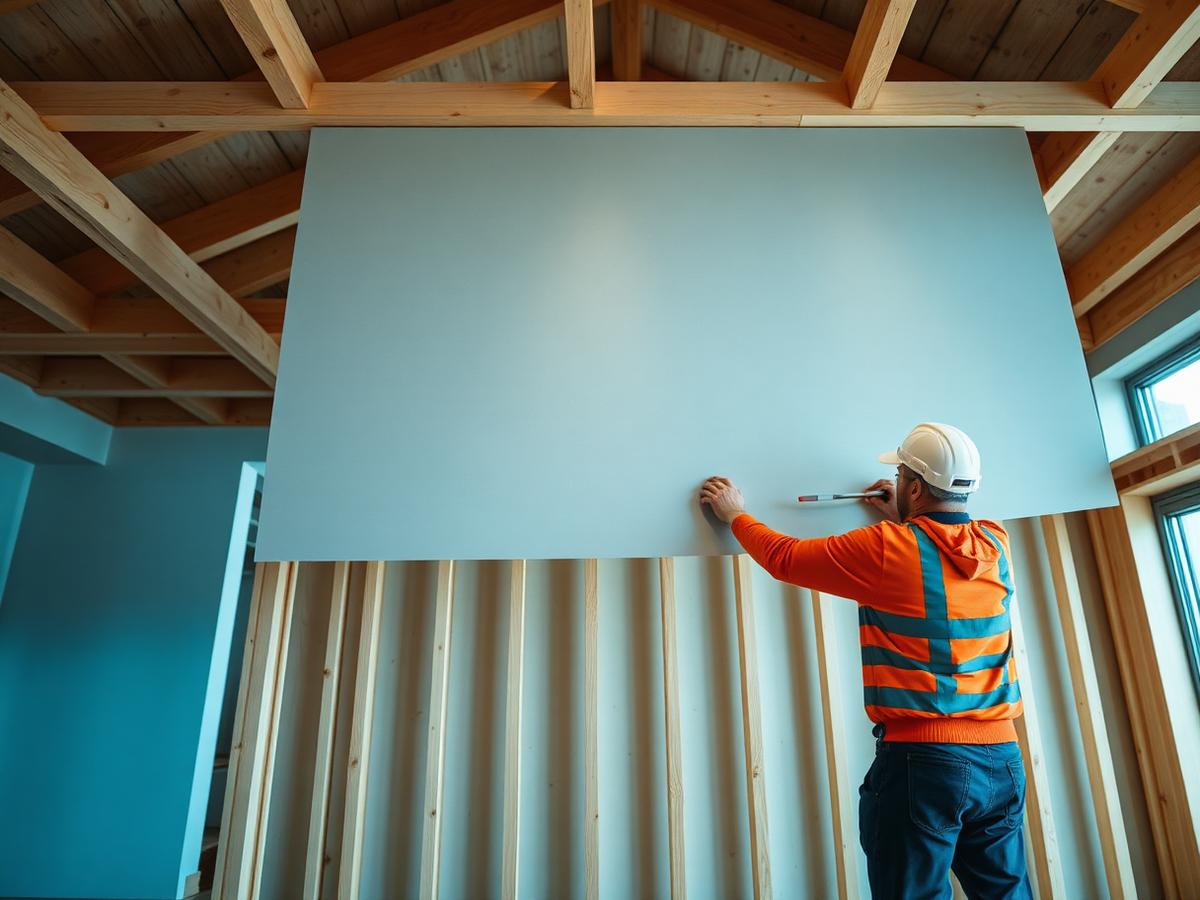
Sheetrock repair and new installation for Romeoville homes and commercial buildings across 60446 and 60441, from single patches to full room hangs.
Free Estimate
Request a drywall repair or installation quote
Share a few details and we'll follow up within one business day.
Sheetrock, gypsum board, and drywall are the same material by different names, and in Romeoville we handle both ends of the work - patching an existing wall or ceiling, and hanging entirely new sheetrock for a remodel, addition, or commercial buildout. Repair calls dominate in the established subdivisions - Wesglen, Highpoint, Marquette Estates, Honeytree, Deer Crossing, and Lakewood Falls - where builder-grade sheetrock installed in the 1990s and 2000s has started showing its age at the seams and corners.
New installation work clusters around two very different projects: residential additions and basement finishes in those same subdivisions, and commercial tenant improvement along the Airport Road and I-55 industrial corridor, where warehouse buildings are routinely subdivided into office space with new partition walls. Both need the same fundamental skill but very different code requirements and finish expectations.
Older properties near the Romeo Road village core sometimes mix plaster and sheetrock from different eras of renovation, and matching a new sheetrock repair into an older plaster wall takes extra attention to get the plane and texture right.
Small holes, cracks, and nail pops are almost always repair candidates - cutting back to sound material, backing the opening, and finishing over it costs a fraction of a full sheet replacement and holds up just as well when done correctly. This covers the vast majority of calls we get from Wesglen, Highpoint, and Deer Crossing homeowners.
Full sheet or full-room replacement makes sense when water damage has saturated a large section, when a room is being reconfigured and walls are coming down anyway, or when truss-uplift damage has recurred so many times that the original board is compromised across a wide area. We will always recommend the less invasive option first and only suggest a full tear-out when repair genuinely will not hold.
In commercial buildings along Weber Road and Airport Road, replacement is more common than repair simply because tenant improvement projects usually involve new partition layouts rather than patching an existing wall into a new floor plan.
Correct sheetrock work starts with layout - planning where sheets meet so butt joints fall in the least visible location and get properly backed rather than left to flex unsupported. On ceilings we specify 5/8-inch board over 24-inch truss spacing to prevent the sag that thinner board develops over years of humidity swings common to Illinois seasons.
Fasteners are spaced to the specification for the wall or ceiling assembly, and every fastener head is set slightly below the surface without breaking the paper face, since a torn face fastener will telegraph through paint no matter how many coats go over it. Joints are taped with paper tape bedded in compound, which carries more tensile strength across a seam than mesh and performs better through seasonal movement.
Fire-rated sheetrock assemblies - garage separations, mechanical room walls, commercial demising walls - are built to the exact layer count and fastener pattern the assembly listing specifies, since inspectors in both Romeoville and the industrial corridor check these details specifically.
Repair work is priced against a half-day minimum for small jobs, since mobilization and the multi-coat drying cycle cost more than the material for a single patch. It pays to have us walk the whole property and quote every repair item in one visit rather than calling us back multiple times for separate small jobs.
Installation work prices by square footage, ceiling height, and finish level, with fire-rated assemblies and moisture-resistant board adding modest material cost where those conditions apply. A basement finish or room addition in Highpoint or Lakewood Falls gets quoted as a complete project rather than a per-sheet estimate, since labor for boxing chases and finishing corners is a bigger cost driver than the raw board itself.
Commercial sheetrock installation for Airport Road and Weber Road tenant improvements is quoted against the project scope and any specific assembly requirements from the building's fire code, and we provide a free itemized estimate before work begins on either residential or commercial jobs.
Residential repair calls typically get scheduled within a week, with urgent issues like pre-sale repairs or water damage moved to next-day or same-week. Larger installation projects like basement finishes or additions are scheduled around framing and inspection milestones, with the full timeline laid out before work starts so there are no surprises about how many visits a project actually takes.
Commercial and industrial sheetrock work along the I-55 corridor runs on the tenant's occupancy timeline, and we schedule after-hours and overnight work in occupied warehouse and distribution buildings so drywall dust and noise never interrupt operations during business hours.
Hours are 8am to 7pm, seven days a week, and the Romeoville line at (847) 796-8872 connects directly to scheduling rather than a call center.
We evaluate whether existing sheetrock can be patched or whether the damage and scope call for replacement.
Sheet layout, board thickness, and moisture or fire rating are specified before any material is ordered.
Sheetrock is hung with proper fastener spacing and butt joints placed and backed for minimal visibility.
Joints are taped with paper tape and finished to the appropriate level for the room's lighting and sheen.
The completed work is sanded under raking light, primed, and reviewed before the job is called done.
Romeoville's housing is largely post-1990 subdivision construction west of Route 53, with older sections near the original village core along Romeo Road. Its commercial base is unusually industrial for the area - the I-55 and Airport Road corridor holds a dense cluster of distribution and light-manufacturing buildings whose office areas need drywall on a regular cycle.
Truss uplift during Will County's dry heating season is the single most common Romeoville call - the ceiling separates from the wall along interior partitions each winter and closes back up in summer. Correct detailing at that joint is what stops the crack from returning.
For the full picture of everything our crews handle locally, see our drywall contractor page for Romeoville, IL, or read the statewide detail on sheetrock repair & installation across Illinois.
Yes, sheetrock and drywall refer to the same gypsum board product. We use both terms interchangeably depending on what our Romeoville customers are used to calling it.
Small holes, cracks, and nail pops are almost always repair candidates and cost far less than replacement. Full replacement makes sense mainly with large water damage, a room reconfiguration, or repeated truss-uplift damage that has compromised the board over a wide area.
Yes, this is a regular part of our commercial work, including fire-rated demising walls and partition layouts built to the specific assembly listing required by the building.
Small repairs are priced against a half-day minimum. Larger installation work prices by square footage, ceiling height, and finish level. Every estimate is free and itemized.
We specify 5/8-inch board on ceilings with 24-inch truss spacing, since half-inch board tends to sag over years of Illinois humidity swings between studs spaced that far apart.
Most repairs are scheduled within a week, and urgent situations like water damage or pre-sale repairs are usually next-day or same-week. We work 8am to 7pm, seven days a week.
Yes, we shim new sheetrock repairs to match the plane of surrounding plaster and match the texture by hand where needed, so the patch does not read as a different material on the wall.
Yes, general liability and workers' compensation coverage on every crew, with certificates of insurance available on request for property managers and general contractors.
Patching holes, cracks, and damaged sections cleanly.
New drywall for additions, remodels, and new construction.
Ceiling patches, sags, and water-damaged areas.
Removing and replacing drywall after leaks or floods.
Turning basements into finished, livable rooms.
Smooth, paint-ready walls and ceilings.