
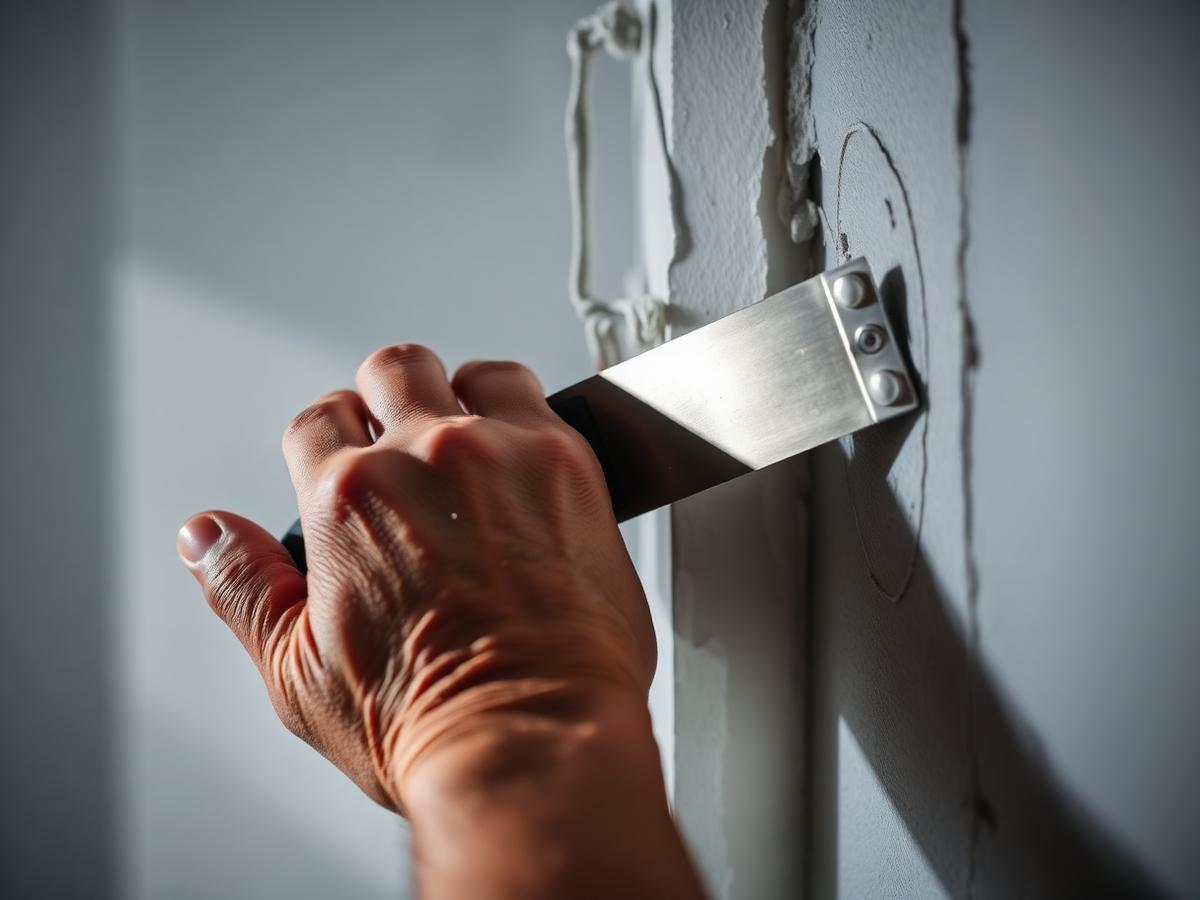
Almost every failed drywall finish we get called to fix comes down to one thing: someone sanded or coated over mud that was not dry. Joint compound does not have a single drying time - it depends on the product, the thickness, and what the air in the room is doing. Here are realistic numbers for drywall taping and mudding work in Illinois.
Joint compound drying times by type
- All-purpose (green lid) at 70F and 50% humidity: 18 - 24 hours per coat
- Lightweight all-purpose (blue lid): 12 - 18 hours per coat
- Topping compound, thin final coat: 8 - 12 hours
- Setting-type 20 minute: hardens in 20 - 30 minutes, coat over it within the hour
- Setting-type 45 and 90 minute: coat over in 1 - 2 and 2 - 4 hours respectively
- Setting-type used for a deep fill: allow extra time, since hardening is not the same as fully dry
Setting compound cures by chemical reaction, so it hardens on schedule even in a humid basement. Drying compound loses water to the air, which is why the same bucket behaves differently in February and July.
How Illinois humidity changes your drywall schedule
A July day in Will County can put indoor relative humidity above 65%, which stretches a normal 18 hour coat to 36 hours or more. Cold slows it too - below about 55F, drying nearly stalls and the compound can crack. The workable window is 55 to 80F with humidity under 55%. More on how our climate affects finishing is in Illinois humidity and your drywall.
How to speed up joint compound drying safely
- Run a dehumidifier in the room rather than pointing a heater at the wall
- Move air across the surface with box fans, not directly at one spot
- Keep the room between 65 and 75F with steady, gentle ventilation
- Apply thin coats - two thin coats dry faster combined than one thick coat
- Switch to setting-type compound for the fill and tape coats when you are on a deadline
What not to do: force-drying one area with a heat gun or space heater. The surface skins over while the core stays wet, and you get shrinkage cracks and blistering a week later.
How to tell joint compound is actually dry
Color is the reliable tell. Wet compound is a darker grey; dry compound goes uniformly bright white with no shadowed patches, especially at the thick center of a joint. It should feel room temperature, not cool - evaporating water pulls heat, so a cool spot is still wet. Press a fingernail lightly at the edge of the joint; if it dents, wait.
What happens if you sand or paint too early
- Sanding wet mud gums the paper, tears the surface, and clogs the sandpaper immediately
- Coating over wet mud traps moisture, causing shrinkage cracks down the center of the joint
- Priming or painting too early leaves flashing, blistering, and joints that read through the finish
- Texturing over wet compound causes the texture to lift and flake - then it becomes a texture matching job
How long before you can paint new drywall?
Plan on the last finish coat being fully dry, sanded, dusted, and primed before topcoat - in practice 24 hours after the final coat in normal conditions, longer in a humid basement. Rushing this is the most common reason a fresh drywall installation shows joint lines a month later.
Need finishing done on a real schedule? We work across Plainfield, Romeoville, and Bolingbrook year-round.
Frequently Asked Questions
How long does joint compound take to dry between coats?
+
All-purpose compound typically needs 18 to 24 hours per coat at 70F and 50% humidity. Lightweight compound runs 12 to 18 hours, and setting-type compound can be coated over in 30 minutes to 4 hours depending on the formula.
How can I tell if drywall mud is dry?
+
It turns uniformly bright white with no darker patches, especially at the thick center of the joint, and it feels room temperature rather than cool. A cool spot means water is still evaporating.
Can you speed up drywall mud drying?
+
Yes - run a dehumidifier, keep the room 65 to 75F, move air gently across the surface with fans, and apply thin coats. Avoid heat guns or space heaters aimed at the wall, which skin the surface while the core stays wet.
Why won't my joint compound dry?
+
Usually high humidity, cold temperatures below 55F, or coats applied too thick. Basements and summer humidity in Illinois routinely double normal drying times.
What happens if you sand joint compound before it dries?
+
The sandpaper gums up, the surface tears, and you cut into the paper facing. Coating over wet mud also traps moisture and produces shrinkage cracks along the joint.
How long after drywall finishing can you paint?
+
Allow the final coat a full 24 hours in normal conditions, then sand, dust thoroughly, and prime before the topcoat. In humid conditions give it longer.