
Drywall Repair in Aurora, IL
Patching holes, cracks, and damaged sections cleanly.
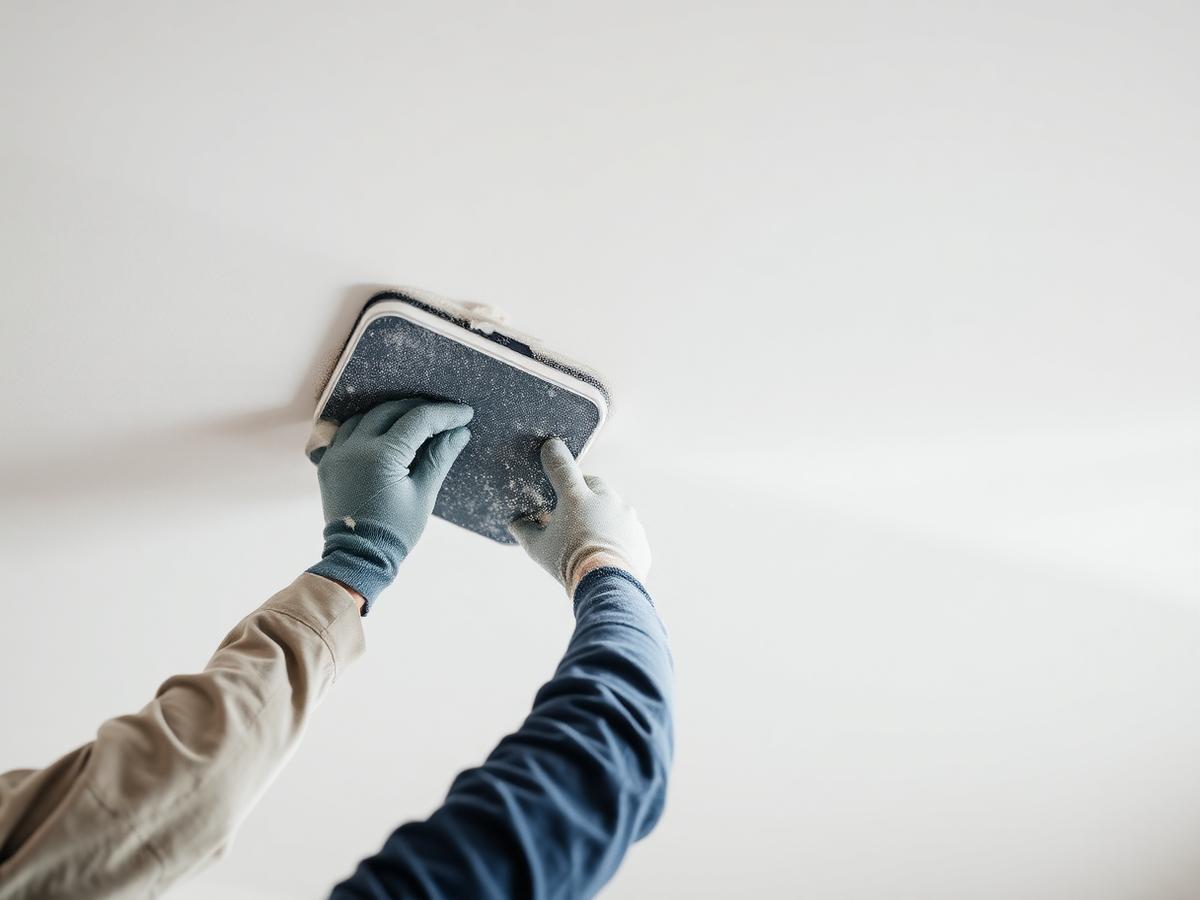
Ceiling crack, sag, and water-stain repair across Aurora's 60502 to 60506 ZIPs, matched to plaster or drywall texture so the ceiling reads as one surface again.
Free Estimate
Request a drywall repair or installation quote
Share a few details and we'll follow up within one business day.
Ceilings take more abuse in Aurora than walls do, mostly because of what sits above them - old flat and low-slope roofs downtown, attic space in older homes that was never insulated to today's standard, and long truss spans in the newer Stonebridge and Oakhurst subdivisions. The calls we get split fairly cleanly by neighborhood and roof type.
On the Near East Side and Near West Side, original plaster ceilings sag where the keys - the plaster that squeezed through the lath during original installation - have broken off over decades of vibration and thermal movement. A sagging plaster ceiling is a safety issue as much as a cosmetic one, since a section that has lost its keys can eventually let go.
In Riddle Highlands, ceiling repair calls are often water stains from an aging roof section, or a cracked ceiling plane where a previous owner drywalled over plaster without addressing why it failed in the first place. In Stonebridge and Oakhurst, we see straight-line cracks at ceiling-to-partition intersections from truss uplift and occasional water staining from ice dams.
A brown ring on a ceiling almost never means the leak is still active, but the drywall or plaster behind it may still be saturated and losing strength even after the source is fixed. We check moisture content with a meter before we patch, because painting over a stain without checking is how a soft spot turns into a collapse a year later.
Ice dams along the eaves of older Near East Side and Near West Side homes back water up under the shingles and into the ceiling cavity every few winters, and the repair usually involves cutting out the saturated section, letting the framing dry, and replacing insulation before the new drywall goes up. Skipping the dry-out step traps moisture that shows up again as a stain the following winter.
In Stonebridge and Oakhurst, second-floor bathroom or laundry leaks are the more common ceiling-stain cause below, and we always ask about the source before quoting, since a repair on top of an unresolved leak is wasted money.
A plaster ceiling that flexes when you press on it has lost its key connection to the lath above and is at risk of falling in sections, not just cracking cosmetically. For small areas we can often screw the plaster back to the joists through the face with plaster washers and skim over it, preserving the original surface at lower cost than a full tear-out.
When more than a third of a ceiling has lost its keys, or the plaster is crumbling rather than just loose, converting to drywall is usually the more economical and longer-lasting choice. We remove the failed plaster, check the joists for any water or insect damage underneath, and hang new board at the same plane so trim and light fixtures line up without modification.
We always give you both options with real pricing rather than defaulting to the more expensive tear-out, since a lot of Near East Side and Near West Side ceilings can be saved with the washer-and-skim approach.
In Stonebridge, Oakhurst, and the Fox Valley Villages, the most common ceiling complaint is a crack that opens along the line where the ceiling meets an interior partition wall every winter and seems to close up again by summer. That is truss uplift, caused by the top chord of an engineered truss drying out and bowing slightly in cold, low-humidity weather while the bottom chord stays stable.
The fix is a floating corner detail - the drywall is attached to the ceiling but not rigidly fixed to the top of the partition wall, so the truss can move seasonally without cracking the joint. Retrofitting this into an existing ceiling means cutting back the joint, adding a slip clip or removing fasteners near the wall, and refinishing with a control joint or careful taping to allow movement.
We explain this clearly at the estimate stage because homeowners often assume a return crack means the first repair was done poorly, when in most Stonebridge and Oakhurst cases it is simply the house doing what engineered trusses do every winter.
Ceiling repairs generally cost a bit more than an equivalent wall repair because of the overhead work position and the need for more careful texture matching, since ceiling texture is often lit at a raking angle that shows imperfections walls do not. Small patches are priced against a half-day minimum, and larger ceiling planes price by square footage and finish level.
Water-damaged ceilings tied to an active insurance claim get documented with photos before we start, which most Aurora homeowners' adjusters want on file. We can work directly from an adjuster's scope or provide our own itemized estimate for comparison.
Most ceiling repairs schedule within a week, and active leaks or safety concerns like a sagging plaster section get next-day or same-week attention since a ceiling that is actively failing should not wait. Every estimate is free and itemized regardless of the size of the job.
We check the ceiling by hand and with a moisture meter to determine whether the surface is a repair candidate or needs to come down.
Roof leak, ice dam, plumbing leak, or truss uplift each get a different fix, and we confirm the source before starting repair work.
Salvageable plaster gets washer-secured and skimmed. Failed sections get cut out and replaced with drywall at the matching plane.
The patch is coated, sanded, and textured to match under the room's actual lighting, then primed so the repair disappears once painted.
Aurora spans four counties and roughly 140 years of construction. The core west and east of the Fox River is pre-1940 housing with plaster walls; the far east side across Eola Road is subdivision construction from the 1990s onward. Retail concentrates on Route 59 near the Fox Valley Mall and along Ogden Avenue, with a distinct downtown district on and around Stolp Island.
Fox River humidity, ice-dam-prone older roofs downtown, and dry heating-season air across the east side mean Aurora sees both classic plaster failure and modern joint cracking - often within a mile of each other.
For the full picture of everything our crews handle locally, see our drywall contractor page for Aurora, IL, or read the statewide detail on ceiling drywall repair across Illinois.
The leak is likely resolved but the drywall or plaster behind the stain may still be saturated and weaker than it looks. We test moisture content before patching so we do not paint over a soft spot.
Often yes, if less than about a third of the ceiling has lost its key connection to the lath. We use plaster washers to reattach it to the joists and skim over the surface, which costs less than a full conversion.
That is typically truss uplift, where the engineered truss bows slightly in cold, dry weather and pulls away from the top of an interior wall. It needs a floating corner detail so the joint can move without cracking again.
Yes. We cut out the saturated section, let the framing dry fully, replace insulation, then rehang and finish new drywall so moisture is not trapped behind the repair.
Small patches price against a half-day minimum, and larger ceiling planes price by square footage and finish level. Every estimate is free and itemized.
Yes, we document damage with photos and can work from an adjuster's scope of work or provide our own itemized estimate for comparison.
Patching holes, cracks, and damaged sections cleanly.
New drywall for additions, remodels, and new construction.
Removing and replacing drywall after leaks or floods.
Turning basements into finished, livable rooms.
Smooth, paint-ready walls and ceilings.
Sheetrock is the brand-name gypsum board most Illinois homes are built with. We repair, patch, and install it.