
Drywall Repair in Aurora, IL
Patching holes, cracks, and damaged sections cleanly.
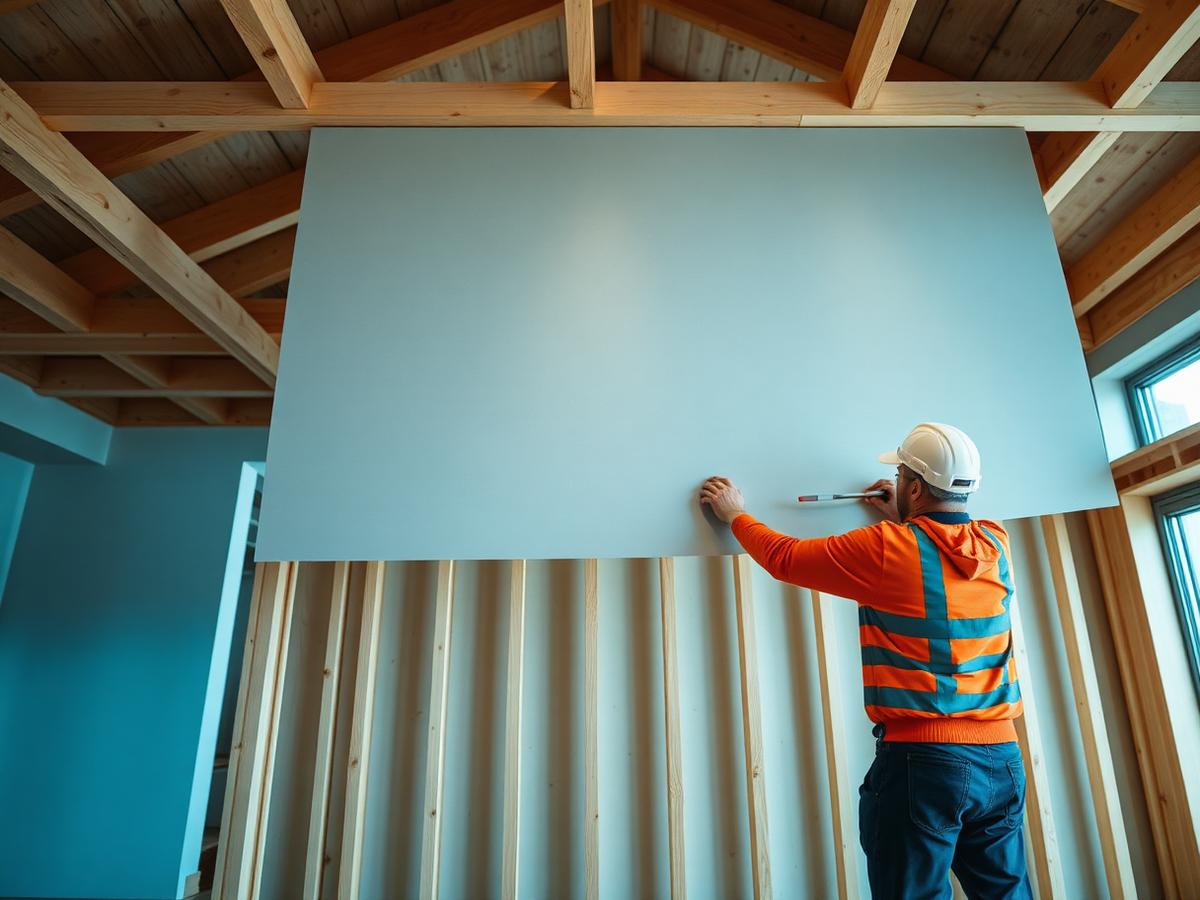
Sheetrock repair and installation across Aurora's 60502 to 60506 ZIPs, covering everything from a single patched hole to a full basement or commercial buildout.
Free Estimate
Request a drywall repair or installation quote
Share a few details and we'll follow up within one business day.
Sheetrock is the brand name most Aurora homeowners still use for gypsum board, and whether you call it sheetrock or drywall, the work we do covers the same range - patching a hole from a moved piece of furniture, replacing a water-damaged section, or hanging an entire basement or addition from scratch. We do not treat small repair calls as an afterthought to bigger installation jobs, since a lot of our daily work in Aurora is exactly that single-hole or single-crack repair.
The neighborhood you live in shapes what kind of sheetrock work is most common. Near East Side and Near West Side calls skew toward plaster patching and plaster-to-drywall conversion given the older housing stock, while Stonebridge, Oakhurst, and the Fox Valley Villages skew toward new installation for basement finishes, additions, and remodels in newer, squarely-framed homes.
Downtown and along the Route 59 and Ogden Avenue corridors, we also do a steady volume of commercial sheetrock work - tenant improvements, office partition walls, and after-hours repair for retail and medical spaces that need to stay open during business hours.
Doorknob holes, closet impact damage, and hallway scuffs are the most common repair calls we get across every Aurora neighborhood, and the fix is straightforward when the damage is isolated - cut back to solid material, back the opening so the patch has support, and finish over multiple coats so it disappears under paint. We avoid stick-on mesh patches for anything larger than a small nail hole, since mesh alone flexes and cracks again under any wall movement.
Cracking sheetrock, especially at corners and above doorways, usually points to either seasonal foundation movement in older homes near downtown or truss uplift in newer Stonebridge and Oakhurst construction, and we diagnose which one is happening before repairing so the fix actually holds through the next season rather than reopening.
For multiple repairs in the same house, we recommend listing everything for one visit, since sheetrock repair pricing is generally set against a half-day minimum and combining several small patches into one trip is more cost-effective than separate calls for each.
New sheetrock installation in Aurora ranges from a single-room addition to a full basement finish, and the process is the same regardless of scale - check the framing, select the right board for the location, hang with attention to joint placement, then tape and finish over multiple drying coats. Moisture-resistant board goes near basement slabs and in bathrooms, Type X fire-rated board goes on garage separation walls, and standard board covers everything else.
In older Near East Side and Near West Side homes converting from plaster, installation includes furring out uneven framing and extending door and window jambs to meet the new wall plane, work that adds time and cost compared to hanging on square, modern framing but is necessary to get a flat result.
Commercial sheetrock installation along Route 59 and downtown runs on metal stud framing with fire-rated demising walls and sound attenuation between tenant spaces, built and photographed to the standard local inspectors expect at rough-in.
Not every damaged wall needs full replacement, and we are upfront about which repairs will hold versus which sections genuinely need to come out. A single water stain with sound, dry material behind it is a repair. A section that has been repeatedly patched and keeps failing, or has visible mold or soft material when pressed, needs to be replaced rather than patched again.
Older plaster walls near downtown sometimes get this decision wrong from prior owners - patched over and over with drywall compound directly over failing plaster - and when we open those walls we often find a mess of old repairs that never addressed the underlying separation from the lath. In those cases, a proper repair means removing the failed material first rather than adding another layer on top.
We give you the honest assessment and the cost difference for both options before starting, since repair is nearly always less expensive when it is a viable long-term fix, and we would rather tell you that than sell a bigger job than the wall needs.
Sheetrock repair pricing is set against a half-day minimum for small jobs and scales by area and finish level for larger repairs, while installation pricing scales with square footage, board type, and finish level, with every estimate free and itemized so you can see exactly what you are paying for. Plaster conversions and commercial buildouts price differently from straightforward new-construction hanging given the extra prep work involved.
We work throughout Aurora and the surrounding towns we serve, including Montgomery, Oswego, North Aurora, Naperville, Batavia, Sugar Grove, and Warrenville, with most repair calls scheduled within a week and urgent damage handled next-day or same-week. Hours are 8am to 7pm, seven days a week.
Whether it is a single patch on the Near East Side or a full basement finish in Stonebridge, we walk the job, give you an honest scope, and put the price in writing before any work starts.
We evaluate whether the job is a repair, a partial replacement, or a full installation, and identify the cause if there is cracking or recurring damage.
Moisture-resistant, fire-rated, or standard sheetrock is chosen based on the room, and furring is planned for older, uneven framing if needed.
New board is hung or the damaged section is cut back and backed, then taped and finished over multiple coats with drying time between each.
The surface is sanded to the appropriate finish level, textured to match if needed, and primed so it disappears once painted.
Aurora spans four counties and roughly 140 years of construction. The core west and east of the Fox River is pre-1940 housing with plaster walls; the far east side across Eola Road is subdivision construction from the 1990s onward. Retail concentrates on Route 59 near the Fox Valley Mall and along Ogden Avenue, with a distinct downtown district on and around Stolp Island.
Fox River humidity, ice-dam-prone older roofs downtown, and dry heating-season air across the east side mean Aurora sees both classic plaster failure and modern joint cracking - often within a mile of each other.
For the full picture of everything our crews handle locally, see our drywall contractor page for Aurora, IL, or read the statewide detail on sheetrock repair & installation across Illinois.
They are the same product - sheetrock is a legacy brand name for gypsum board that a lot of homeowners still use interchangeably with drywall. Our repair and installation process is identical regardless of which term you use.
Yes, small holes and impact damage are some of the most common calls we get across Aurora, and pricing is set against a half-day minimum, so combining several small patches into one visit is the most cost-effective approach.
Yes, including full plaster-to-drywall conversions with furring and jamb extensions to account for framing that is rarely square in homes built before 1930.
A single stain or crack with sound, dry material behind it is usually a repair. Repeatedly patched sections, soft material, or visible mold need removal and replacement rather than another patch on top.
Yes, along Route 59, Ogden Avenue, and downtown we install metal-stud framing with fire-rated demising walls for tenant improvements, and can schedule after hours so the business stays open.
In addition to Aurora, we regularly work in Montgomery, Oswego, North Aurora, Naperville, Batavia, Sugar Grove, and Warrenville, with the same free itemized estimate process throughout the area.
Patching holes, cracks, and damaged sections cleanly.
New drywall for additions, remodels, and new construction.
Ceiling patches, sags, and water-damaged areas.
Removing and replacing drywall after leaks or floods.
Turning basements into finished, livable rooms.
Smooth, paint-ready walls and ceilings.