
Drywall Repair in Aurora, IL
Patching holes, cracks, and damaged sections cleanly.
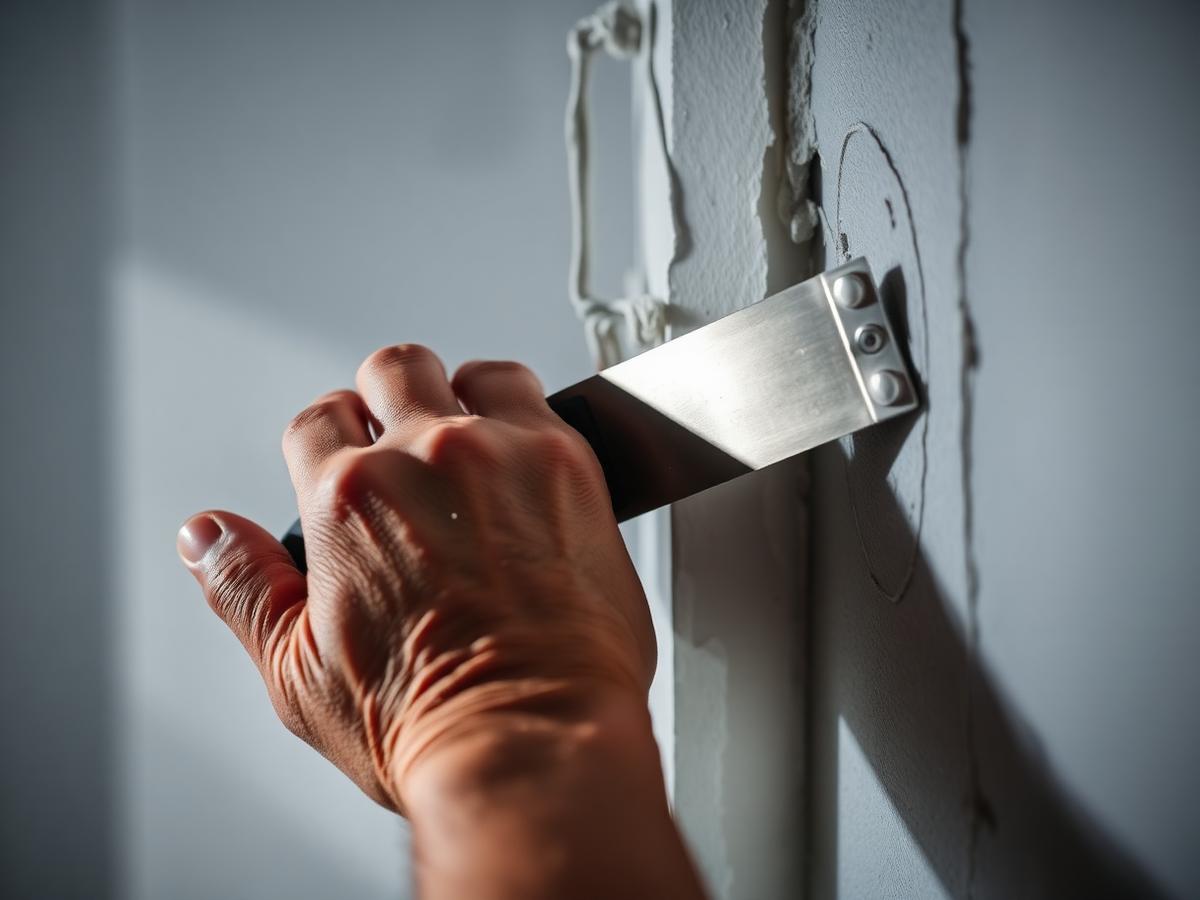
Taping, coating, and texture finishing across Aurora's 60502 to 60506 ZIPs, from smooth Level 5 great rooms in Stonebridge to hand-matched plaster texture near downtown.
Free Estimate
Request a drywall repair or installation quote
Share a few details and we'll follow up within one business day.
Finishing is the step that determines whether a drywall job looks professional or shows every seam under evening light, and it is where we spend the most hands-on time relative to hanging board. In new construction and remodels out in Stonebridge, Oakhurst, and the Fox Valley Villages, finishing means three or more coats of joint compound over tape and fasteners, sanded flat and true before texture or paint goes on.
Near downtown and on the Near East and West Sides, finishing more often means matching an existing plaster texture on a patch or a partial-room repair, which requires a different skill set than finishing new drywall - hand-troweling or brush-texturing rather than spraying a uniform pattern across an entire surface. We treat these as genuinely different jobs, not the same process applied to different substrates.
Riddle Highlands and other older neighborhoods regularly need both in the same house, since a remodel might convert one wall to new drywall while leaving the adjoining plaster ceiling intact, and getting those two surfaces to read as one continuous plane at the corner takes careful attention to thickness and texture transition.
Level 4 finish - three coats over tape and fastener heads, sanded smooth - is the standard for most bedrooms, hallways, and basements, and it holds up fine under typical room lighting with flat or matte paint. It is the right choice for the majority of rooms in a Stonebridge or Oakhurst remodel, and specifying Level 5 everywhere would add cost without a visible benefit in most of those spaces.
Level 5 finish adds a thin skim coat of compound over the entire wall or ceiling surface, which eliminates the slight texture difference between the taped joint and the surrounding paper that can flash through under raking light or a higher-sheen paint. We recommend it for great rooms with large west-facing windows, any surface getting eggshell or satin paint, and long walls lit by can lighting that rakes across the surface at a low angle.
The decision should be made room by room based on actual lighting conditions, not applied uniformly to save a conversation, and we walk each room with you at the estimate stage to point out where the extra cost of Level 5 is worth it and where it is not.
Pre-1930 homes on the Near East Side and Near West Side commonly have hand-applied sand-float or skip-trowel plaster finishes that vary from room to room and even wall to wall within the same room, since the original plasterers worked by hand rather than to a fixed specification. Matching this on a patch means testing on a sample board first, adjusting sand content and trowel technique, and comparing under the room's actual light before committing to the whole repair area.
Some of these homes have been partially converted to drywall over the decades, so a single room can have plaster on one wall and drywall on another, each requiring a different finishing approach to look consistent. We identify which surface is which before quoting, since assuming uniformity across a century-old house leads to a mismatched result.
For full plaster-to-drywall conversions, we finish new board to a texture and sheen that matches the remaining original plaster in adjoining rooms wherever the two will be visible from the same sightline, rather than leaving an obvious seam in finish quality between old and new work.
Stonebridge, Oakhurst, and the Fox Valley Villages were built across different construction phases, and each phase's builder used a slightly different spray texture pattern and mud consistency, so matching an addition or repair to the surrounding ceiling requires testing on a sample board rather than assuming a standard knockdown pattern will blend in.
Smooth, texture-free ceilings and walls have become more common in newer great rooms and primary suites, and finishing those to a true Level 4 or Level 5 flat surface takes more sanding passes and stronger lighting during the process than a textured surface would, since there is no texture to hide a slightly high or low spot.
We spray or hand-apply a test patch before working on the full ceiling or wall in every case, since even a slight mismatch in orange peel droplet size or knockdown flatten pattern is noticeable once the compound dries and gets painted.
Finishing pricing depends on square footage, finish level, and whether texture matching is involved, with plaster texture matching generally taking longer per square foot than spraying a uniform pattern on new drywall. Level 5 finishing adds labor cost over Level 4 because of the additional skim coat and sanding pass across the entire surface rather than just the joints.
Finishing work needs drying time between coats, so a realistic schedule allows for that even when the hang itself only takes a day or two - rushing coats to compress the schedule usually shows up later as shrinkage cracking or a flashing sheen difference once painted. We build the coat schedule to the season, since Kane County's dry winters speed drying and humid summers slow it.
Every Aurora finishing estimate is free and itemized, and we are upfront about which rooms genuinely benefit from Level 5 versus which are fine with a standard Level 4 finish, so you are not paying for finish quality the room's lighting will never show off.
We walk each room to determine whether Level 4 is sufficient or Level 5 is worth the added labor given window exposure and planned paint sheen.
For any texture matching, we test sand content, spray pattern, or knockdown flatten on a sample before applying it to your walls or ceiling.
Joints and fasteners are taped and coated three or more times with drying time between each pass, sanded progressively smoother.
The matched texture or Level 5 skim is applied, sanded under raking light, and every surface is primed for uniform paint absorption.
Aurora spans four counties and roughly 140 years of construction. The core west and east of the Fox River is pre-1940 housing with plaster walls; the far east side across Eola Road is subdivision construction from the 1990s onward. Retail concentrates on Route 59 near the Fox Valley Mall and along Ogden Avenue, with a distinct downtown district on and around Stolp Island.
Fox River humidity, ice-dam-prone older roofs downtown, and dry heating-season air across the east side mean Aurora sees both classic plaster failure and modern joint cracking - often within a mile of each other.
For the full picture of everything our crews handle locally, see our drywall contractor page for Aurora, IL, or read the statewide detail on drywall finishing across Illinois.
Level 4 is three coats over tape and fasteners, sanded smooth, and works fine for most rooms under normal lighting. Level 5 adds a full skim coat over the entire surface, which prevents joints from flashing through under raking light or higher-sheen paint.
It depends on the room. Great rooms with large windows, any wall getting eggshell or satin paint, and surfaces lit by can lighting benefit from it. Most bedrooms and hallways are fine with Level 4, and we will tell you honestly which is which.
Yes, for pre-1930 homes on the Near East Side and Near West Side we test sand content and trowel technique on a sample board before matching the repair area, since original plaster texture varies room to room.
We spray a test patch and compare it under your ceiling's actual light before finishing the full repair, since builders used different texture patterns across Stonebridge, Oakhurst, and Fox Valley Villages construction phases.
It depends on finish level and drying time between coats, generally a few days of hands-on work spread across a week or more of calendar time so each coat dries properly before the next.
Pricing depends on square footage, finish level, and whether texture matching is involved, with plaster matching typically costing more per square foot than new-construction spray texture. Every estimate is free and itemized.
Patching holes, cracks, and damaged sections cleanly.
New drywall for additions, remodels, and new construction.
Ceiling patches, sags, and water-damaged areas.
Removing and replacing drywall after leaks or floods.
Turning basements into finished, livable rooms.
Sheetrock is the brand-name gypsum board most Illinois homes are built with. We repair, patch, and install it.