
Drywall Repair in Aurora, IL
Patching holes, cracks, and damaged sections cleanly.
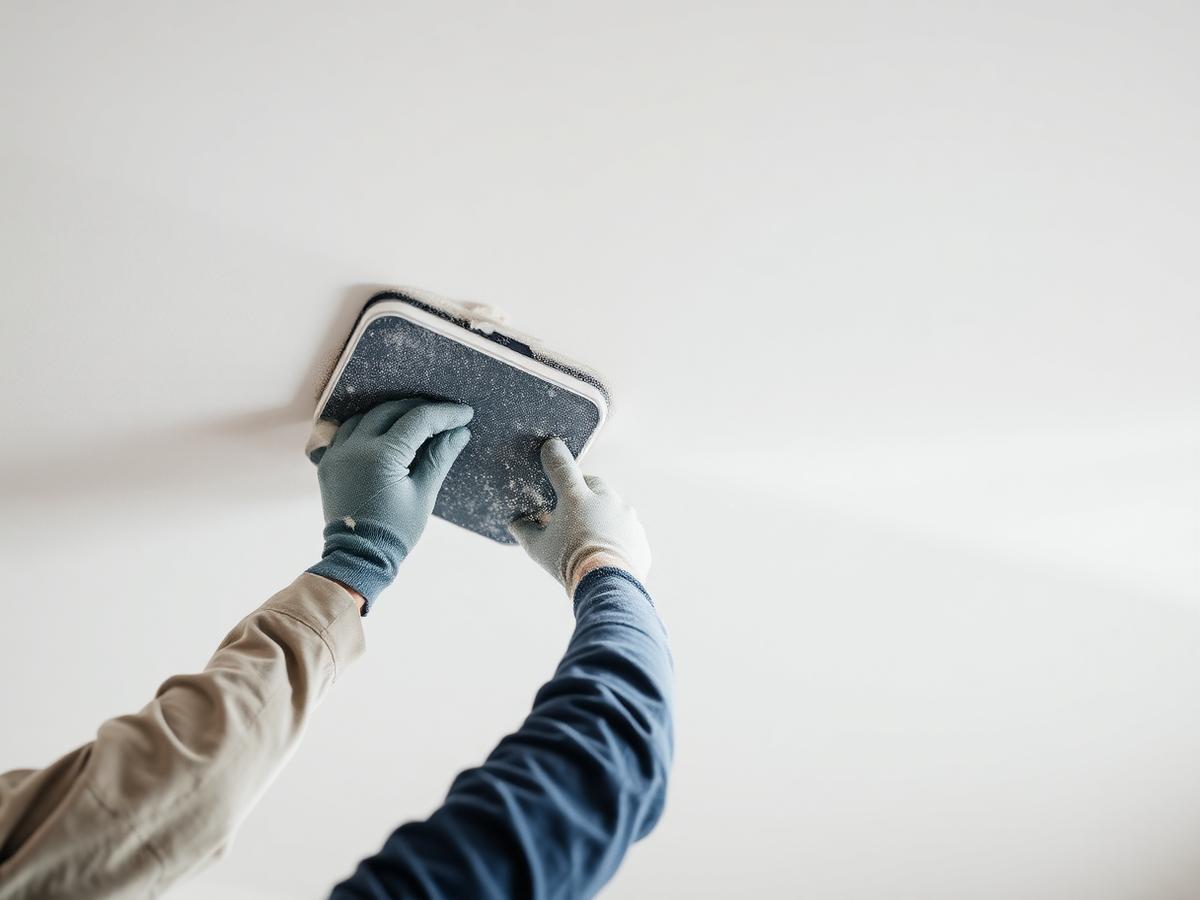
Water damaged drywall repair for Aurora homes across 60502 to 60506, from Near East Side plaster ceilings to Stonebridge basement flooding, with mold-aware cutout and rebuild.
Free Estimate
Request a drywall repair or installation quote
Share a few details and we'll follow up within one business day.
Water damage calls in Aurora come from a handful of repeat sources depending on the neighborhood and the age of the home. Downtown and on the Near East and West Sides, older plumbing stacks and aging roof flashing cause slow leaks that show up as stains long before anyone notices standing water, and by the time the ceiling sags the plaster or drywall behind it has usually lost most of its strength.
In Stonebridge, Oakhurst, and the Fox Valley Villages, we see more basement flooding from sump pump failures and heavy spring rain overwhelming grading, plus second-floor leaks from washing machine hoses and bathroom supply lines above finished lower levels. Both scenarios call for the same first step - stop the source, then assess how far the water traveled before starting demolition.
Riddle Highlands and other transitional neighborhoods see a mix of both patterns, often complicated by decades-old plumbing runs that were never updated when the house was remodeled. We always trace water damage back to its actual boundary before cutting, since water travels sideways along a top plate or down a stud bay well past the visible stain.
The rule we work by is simple: cut back to dry, sound material, not just to the edge of the visible stain. Drywall wicks water sideways through its paper facing, so a stain that looks six inches wide on the surface can mean water traveled two feet further inside the wall cavity, and stopping the cut at the visible edge just leaves hidden wet material behind the new patch.
We check framing moisture content with a meter as we go, and any stud, joist, or sill plate that is still elevated gets time to dry with fans and dehumidification before we close the wall back up. Closing a wall over wet framing is one of the most common causes of mold complaints months after a repair, and it is entirely avoidable by testing before rebuilding.
For basement flooding in Stonebridge and Oakhurst, we typically remove drywall to at least a foot above the visible water line, since wicking and wall cavity humidity during the flood event usually extend higher than the flood line itself, especially on paper-faced board.
Standing water for more than 24 to 48 hours changes how we approach a basement drywall repair. Once that window has passed, we assume mold growth is possible inside the wall cavity even if the drywall face looks clean, and we inspect the back side of removed board, the framing, and any insulation before deciding what gets replaced versus dried in place.
Fiberglass batt insulation that has been saturated almost always needs replacement rather than drying, since it loses R-value permanently and holds moisture against the framing far longer than the framing alone would retain it. Rigid foam and mineral wool tolerate wetting better but still get inspected case by case.
Once framing tests dry and any contaminated material is removed, we rebuild with moisture-resistant or paperless drywall on foundation walls, which is a meaningfully better long-term choice than standard paper-faced board in a below-grade Aurora basement that will see humidity swings every year regardless of a future flood.
Most Aurora homeowners dealing with a burst pipe, sump failure, or roof leak are working with an insurance claim at the same time as the repair, and we document existing damage with photos before we touch anything so there is a clear record for the adjuster. We can work from an adjuster's approved scope of work or provide our own itemized estimate if you want a second number for comparison.
Timing matters with insurance claims because most policies expect reasonable mitigation to prevent further damage, so we prioritize stopping active water intrusion and starting the drying process even before the full repair scope is finalized. Delaying dry-out to wait on paperwork usually makes the eventual repair larger and more expensive.
We keep communication straightforward with property managers and homeowners alike - what we found, what needs to be removed, what can be dried and saved, and a written cost breakdown before any work beyond emergency mitigation begins.
Pricing for water damaged drywall repair depends on how much material has to come out, whether insulation and framing drying are involved, and the finish level of the room being rebuilt. A single ceiling patch from a slow roof leak costs far less than a full basement rebuild after a sump pump failure that ran overnight.
Active water damage is treated as urgent regardless of neighborhood - a leak that is still spreading or a flooded basement gets next-day or same-week response because delay increases both the damage and the eventual cost. Once the source is controlled and the area is drying, the actual rebuild schedules like any other repair or installation project.
Every estimate is free and itemized, separating demolition, drying, and rebuild costs so you can see exactly what you are paying for, whether you are handling the cost directly or working through an insurance claim.
We confirm the leak or flood source is controlled, then trace how far water traveled through walls and cavities before any demolition starts.
Damaged material is removed past the visible stain to sound, dry framing, and fans or dehumidifiers run until moisture readings confirm the space is ready to rebuild.
Saturated insulation is replaced, and framing and cavities are checked for mold growth before anything is closed back up.
New drywall is hung, taped, textured, and primed to match the surrounding surface, with documentation available for your insurance file.
Aurora spans four counties and roughly 140 years of construction. The core west and east of the Fox River is pre-1940 housing with plaster walls; the far east side across Eola Road is subdivision construction from the 1990s onward. Retail concentrates on Route 59 near the Fox Valley Mall and along Ogden Avenue, with a distinct downtown district on and around Stolp Island.
Fox River humidity, ice-dam-prone older roofs downtown, and dry heating-season air across the east side mean Aurora sees both classic plaster failure and modern joint cracking - often within a mile of each other.
For the full picture of everything our crews handle locally, see our drywall contractor page for Aurora, IL, or read the statewide detail on water-damaged drywall repair across Illinois.
We test with a moisture meter and cut back to dry, sound material rather than stopping at the visible stain, since water wicks sideways through drywall paper well past what you can see on the surface.
If water stood for more than about 24 to 48 hours, we treat mold as a possibility and inspect the back of the drywall, framing, and insulation before deciding what to replace versus dry in place.
Fiberglass batt insulation almost always needs replacement once saturated, since it loses R-value permanently and holds moisture against framing. Rigid foam and mineral wool are evaluated case by case.
Yes, we document damage with photos before starting and can work from an adjuster's approved scope or provide our own itemized estimate for comparison.
Active water damage gets next-day or same-week response because delay increases both the damage and the eventual repair cost. We prioritize stopping intrusion and starting drying immediately.
Moisture-resistant or paperless board on foundation walls, which holds up better long-term in a below-grade Aurora basement than standard paper-faced board given normal humidity swings.
Patching holes, cracks, and damaged sections cleanly.
New drywall for additions, remodels, and new construction.
Ceiling patches, sags, and water-damaged areas.
Turning basements into finished, livable rooms.
Smooth, paint-ready walls and ceilings.
Sheetrock is the brand-name gypsum board most Illinois homes are built with. We repair, patch, and install it.