
Drywall Repair in Joliet, IL
Patching holes, cracks, and damaged sections cleanly.
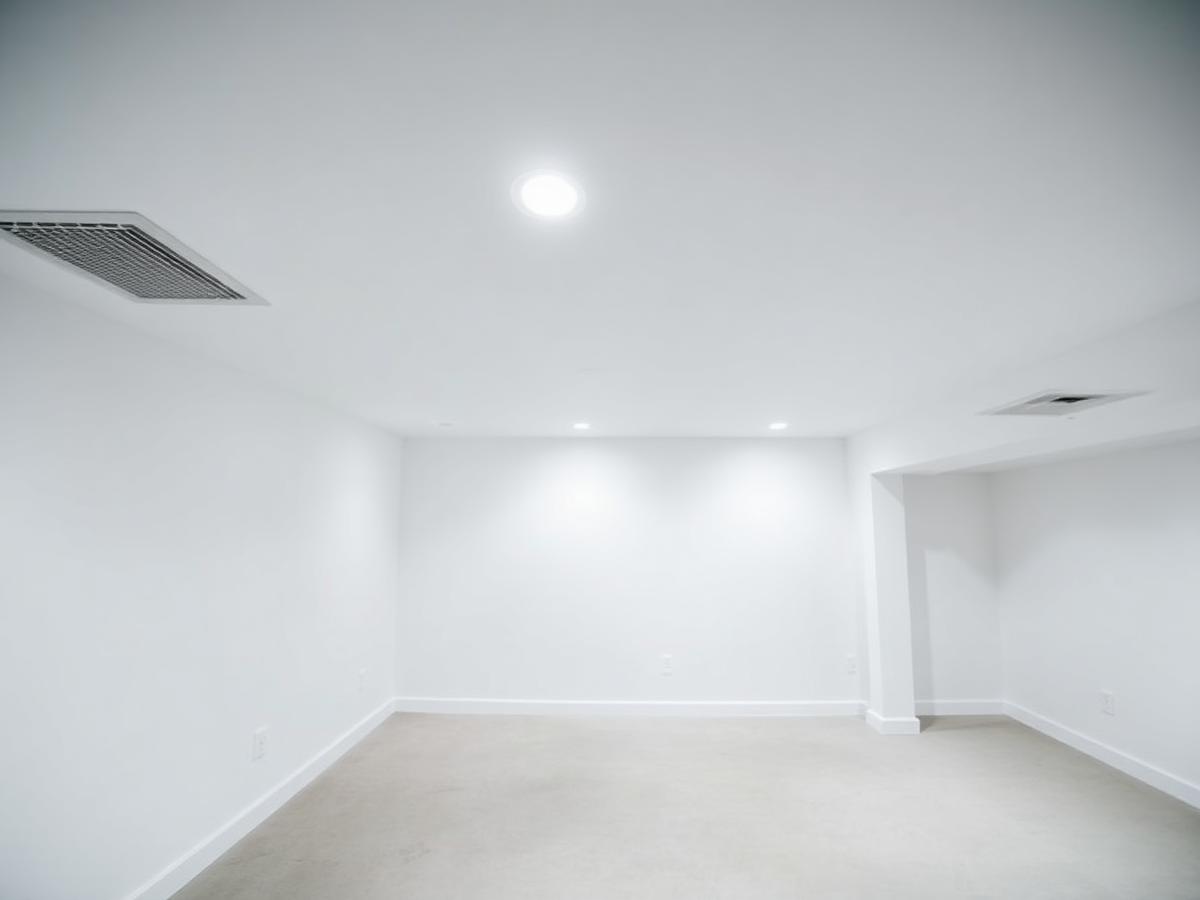
Basement drywall hung, taped, and finished for Joliet homes across 60431 to 60436, built around Will County's clay soils and slab moisture conditions.
Free Estimate
Request a drywall repair or installation quote
Share a few details and we'll follow up within one business day.
Basement finishing is one of our steadiest categories of work in Joliet, concentrated heavily in Ridgewood and Hickory Creek, where 1990s and 2000s subdivision homes came with unfinished basements as a standard feature that owners finish years later for a rec room, home office, or guest suite. These basements typically have full-height walls, engineered framing above, and straightforward layouts, which makes for predictable, efficient installation.
Older homes near the Cathedral Area, Upper Bluff, and scattered through the West Side and East Side present a tougher basement condition - lower ceiling heights, fieldstone or block foundations with uneven surfaces, and existing moisture history that needs to be addressed honestly before any drywall goes up. We will not finish a basement wall over an active moisture problem just because a homeowner wants the space done.
Across both conditions, the fundamentals are the same: proper framing off the foundation wall, the right board for a below-grade environment, and ceiling drywall detailed around whatever ductwork, plumbing, and electrical runs the mechanical trades left overhead.
Will County's clay soils drain slowly, which means foundation walls in Joliet basements stay in contact with damp soil far longer after a storm than sandier soils elsewhere would allow. That constant moisture pressure is why we frame basement walls with a small air gap off the foundation and specify moisture-resistant or paperless board for the lower portion of every basement wall, regardless of whether the homeowner has ever had a flood.
Sump pump reliability is the other half of the equation in Ridgewood and Hickory Creek basements, since heavy spring storms push a lot of water toward foundation drain tile at once. We always ask about pump age and battery backup before finishing a basement, because drywall installed over an unreliable sump system is a repair we will likely see again.
In older homes with fieldstone or block foundations, efflorescence - the white mineral residue left behind as moisture wicks through masonry and evaporates - is a sign the wall is still passing moisture and needs to be addressed, sometimes with a dehumidification or drainage fix, before we frame and hang drywall over it.
We specify moisture-resistant or paperless board on all basement walls in Joliet regardless of subdivision, and standard board only above a certain height on walls that stay consistently dry. Ceilings get 5/8-inch board where truss or joist spans run 24 inches on center, since standard half-inch board sags over time in a basement's more humid, stable-temperature air.
Framing is built with a gap off the concrete rather than tight against it, both for the air gap and to allow any future moisture intrusion to be caught before it reaches the drywall. Egress window wells, mechanical room partitions, and any wall enclosing a furnace or water heater get fire-rated board per code, which Joliet inspectors verify on permitted basement finishes.
For soffits boxing in ductwork and plumbing, we plan bulkhead framing early in the job so drywall corners land clean and the finished ceiling height stays consistent across the room rather than stepping down awkwardly around mechanicals.
A typical Ridgewood or Hickory Creek basement finish runs two to three weeks from first sheet to sanded and primed walls, depending on soffit count, whether there is a wet bar or bathroom rough-in, and how much ductwork needs boxing. Older homes with fieldstone foundations or lower ceiling heights can take longer due to the extra framing work.
Pricing scales with square footage, finish level, and the amount of soffit and bulkhead framing required, and every estimate is free and itemized so you can see hang, tape, and finish costs separately. Most Joliet homeowners choose a Level 4 finish for basement walls and ceilings, since basements rarely have the raking natural light that would justify a Level 5 skim.
We do not upsell moisture-resistant board as an option - it is standard on basement walls in our estimates because the cost difference is small compared to the cost of redoing a wall that failed from wicked moisture within a few years.
Basement finishing in Joliet requires a permit in most cases, and we coordinate our framing and drywall schedule around the rough electrical and plumbing inspections that typically happen before board goes up. We build in the inspection wait time when we quote the timeline, so there are no surprise delays mid-project.
Spring is our busiest basement season in Joliet, driven partly by homeowners finishing basements after a wet winter convinces them to finally deal with the space, and partly by the general remodeling calendar. We recommend booking a few weeks ahead in spring for the best scheduling flexibility.
Hours are 8am to 7pm, seven days a week, and estimates are always free whether you are planning a full basement finish or just want to know what one would cost before committing.
We check sump pump condition, foundation moisture signs, and existing ductwork and plumbing layout before framing begins.
Walls are framed off the foundation with an air gap, and soffits are planned around mechanicals for a clean, consistent ceiling line.
Moisture-resistant or paperless board goes on all basement walls, with fire-rated board around mechanical rooms per code.
Joints are taped and finished over multiple coats, sanded between drying, to a Level 4 or Level 5 finish depending on the room.
The finished basement is primed and ready for paint, trim, or flooring, with the site cleaned and debris hauled away.
Joliet is the largest city in Will County and has the widest range of housing age we work in - pre-1920 masonry and frame homes near downtown and the Upper Bluff, mid-century bungalows across the East and West Sides, and 1990s-and-newer subdivisions pushing out toward Plainfield and Shorewood. Commercial demand clusters downtown along Chicago and Jefferson Streets, at the Louis Joliet Mall, and along the Larkin Avenue and Route 30 retail corridors.
Will County freeze-thaw swings and dry forced-air heat crack older plaster and open drywall joints along ceiling-wall intersections. Spring storms and ice dams drive the ceiling water damage calls we get most from the older roofs near downtown Joliet.
For the full picture of everything our crews handle locally, see our drywall contractor page for Joliet, IL, or read the statewide detail on basement drywall across Illinois.
Yes, we specify it on all basement walls as standard, not as an upsell, since Will County's clay soils keep foundation walls in contact with moisture longer after storms than better-draining soils would allow.
Typically two to three weeks from first sheet to sanded and primed, depending on soffit count and whether there is a wet bar or bathroom rough-in involved.
We will assess the cause first, including sump pump reliability and foundation moisture signs. If the underlying issue isn't resolved, we will tell you rather than finish drywall over a problem likely to recur.
Yes. Uneven fieldstone or block walls need more careful framing to get a flat, plumb wall, and any efflorescence on the masonry should be addressed before we hang drywall over it.
Pricing scales with square footage, finish level, and soffit or bulkhead complexity. Every estimate is free and itemized so you can see hang, tape, and finish costs separately.
In most cases yes, and we build our schedule around the required rough electrical and plumbing inspections that happen before drywall goes up.
Level 4 is standard for most basement walls and ceilings, since basements rarely have the strong raking light that would justify the extra cost of a Level 5 skim finish.
Patching holes, cracks, and damaged sections cleanly.
New drywall for additions, remodels, and new construction.
Ceiling patches, sags, and water-damaged areas.
Removing and replacing drywall after leaks or floods.
Smooth, paint-ready walls and ceilings.
Sheetrock is the brand-name gypsum board most Illinois homes are built with. We repair, patch, and install it.